
7 Ideal Locations for Sacred Art on a Church Campus
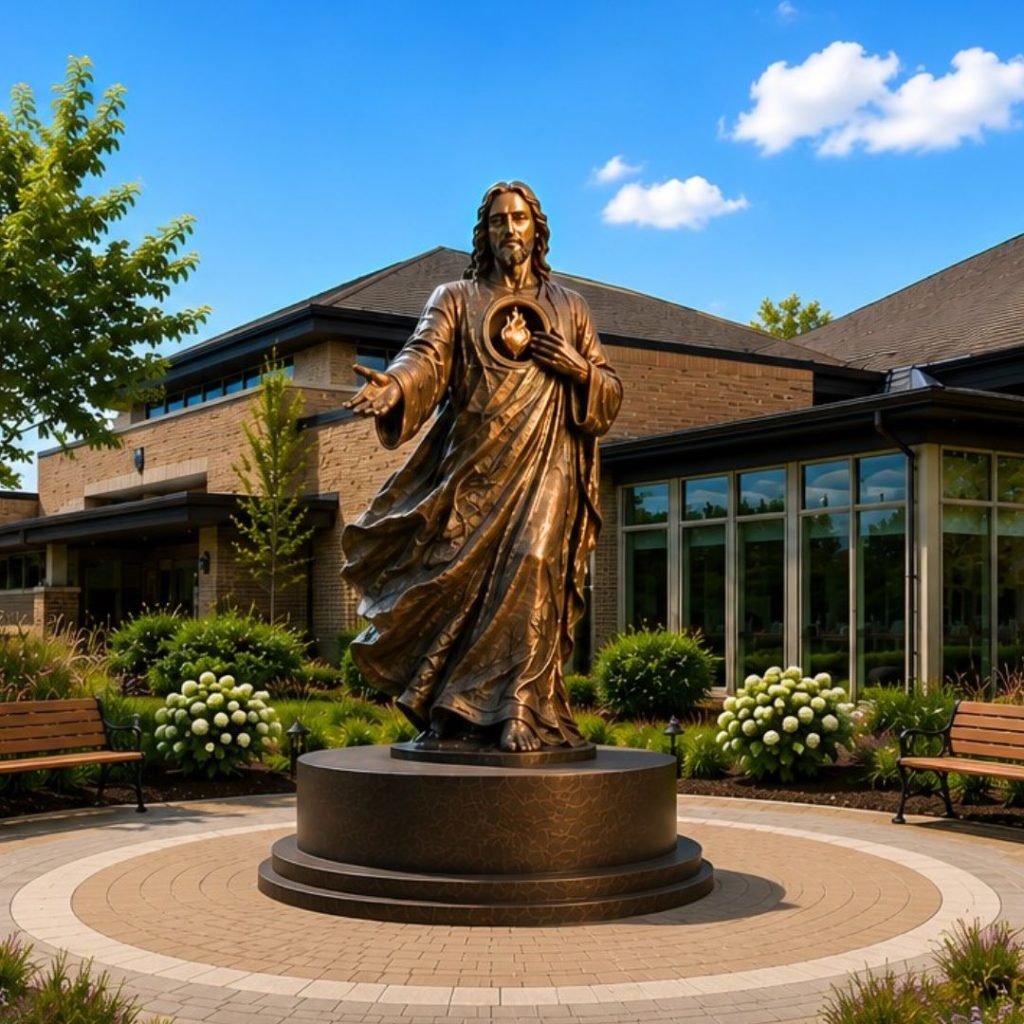
The most successful church beautification projects begin by recognizing the hidden potential already present on a campus. In this concept by Indweller Artistic, a simple courtyard becomes a destination for prayer, reflection, and community gathering through the thoughtful integration of sacred art, seating, pathways, and landscaping. When people think about sacred art, they often focus on the sculpture itself—the saint, the scene, the craftsmanship, or the symbolism. Yet one of the most important factors in the success of any sacred art project is something much simpler: location. Great sacred art does more than fill an empty space. It transforms a place into a destination. It creates opportunities for prayer, reflection, learning, and community. The most successful projects begin not with the question, “What statue should we install?” but rather, “Where can sacred art have the greatest impact on our church campus design?” Many churches, schools, and religious institutions already possess the perfect location for a sculpture without realizing it. A neglected courtyard, an underutilized lawn, an empty wall, or a forgotten corner of the property may have tremendous potential to become a meaningful focal point. Whether your goal is church beautification, strengthening Catholic identity, creating outdoor devotional spaces, or establishing a new gathering place for parishioners, here are seven ideal locations for sacred art on a church campus. 1. The Main Entrance to the Church The entrance to a church is often the most visible and heavily trafficked area of the entire campus. Every parishioner, visitor, student, and guest passes through this space. For this reason, the church entrance monument is frequently one of the most impactful locations for sacred art. A church entrance monument immediately communicates the identity of a parish. By placing a recognizable image of Our Lady near the main doors, churches create a visible expression of hospitality, devotion, and Catholic identity that greets visitors before they even enter the building. A well-placed sculpture immediately communicates the identity of the parish. A statue of the parish patron saint, Our Lady, Saint Joseph, or Christ Himself can serve as a visual introduction to the mission and spirituality of the community. Beyond its symbolic value, a church entrance monument creates a memorable first impression. It tells visitors that this is a place where beauty, faith, and devotion matter. When designing an entrance installation, consider incorporating landscaping, benches, pathways, and lighting to create a complete experience rather than simply placing a statue on a pedestal. 2. A Prayer Garden Few locations are better suited to outdoor sacred art than a dedicated prayer garden. A prayer garden provides a place for quiet reflection away from the activity of daily parish life. Prayer gardens combine sacred art, landscaping, and natural beauty to create outdoor places of encounter. Inspired by Saint Thérèse’s promise to “spend my heaven doing good on earth,” this concept demonstrates how sculpture can become the centerpiece of a devotional garden that encourages reflection and prayer. It offers parishioners a space to pray the rosary, meditate, read Scripture, or simply sit in silence. Many churches already have unused lawn areas that can be transformed into beautiful prayer gardens through thoughtful church campus design. Common focal points include: Adding seating, shade, landscaping, and devotional signage can significantly increase the use of these spaces. A successful prayer garden often becomes one of the most beloved areas on a parish campus because it gives people permission to slow down and encounter God in a peaceful outdoor setting. 3. A Marian Shrine Near the Church Among all forms of outdoor sacred art, the Marian shrine remains one of the most enduring and universally loved. The most successful Marian shrines are not defined by the sculpture alone but by the prayer they inspire. In this concept, Love at First Sight serves as the focal point of a devotional space where parishioners can sit quietly, pray, and entrust their intentions to Our Lady. Catholics have a long tradition of gathering around images of Our Lady for prayer, intercession, and devotion. A dedicated Marian shrine can become a year-round destination for parishioners and visitors alike. Unlike many other projects, a Marian shrine does not require a large footprint. Even a modest space can become a powerful devotional area when thoughtfully designed. Elements often include: Because Marian devotion transcends generations, a well-designed shrine often becomes a gathering place for families, students, seniors, and visitors. 4. The Parish Courtyard Many churches possess outdoor courtyards that function primarily as transitional spaces. People walk through them, but few linger. Sacred art can change that. Courtyard sculptures help transform transitional spaces into places of encounter. Inspired by Saint John Bosco’s ministry to youth, this concept illustrates how sacred art can encourage both conversation and reflection while creating a visual focal point within parish life. A courtyard sculpture creates a natural focal point and encourages interaction. Rather than simply moving through the space, parishioners begin using it as a place for conversation, reflection, and community gathering. The most successful courtyard projects often include figurative sculptures depicting scenes that invite engagement. Examples might include: These installations help transform ordinary spaces into places of encounter. From a church beautification perspective, few investments can change the character of a courtyard as dramatically as a thoughtfully placed sculpture. 5. The Catholic School Campus Entrance For churches that operate schools, sacred art plays an important role in reinforcing mission and identity. A Catholic school campus should communicate its values immediately. The entrance to a Catholic school offers a unique opportunity to communicate mission and identity. Sculptures depicting saints, founders, or modern Catholic role models reinforce the values a school hopes to cultivate in its students. Sacred art helps create that first impression. When students pass a statue every day, they begin developing a relationship with the person represented. The sculpture becomes part of the educational environment rather than merely decoration. Popular locations include: Many Catholic schools choose saints associated with education, service, leadership, or holiness. The result is more than beautification. It becomes an extension of the