
More Than Decoration: Why Sacred Art Matters in Catholic Education
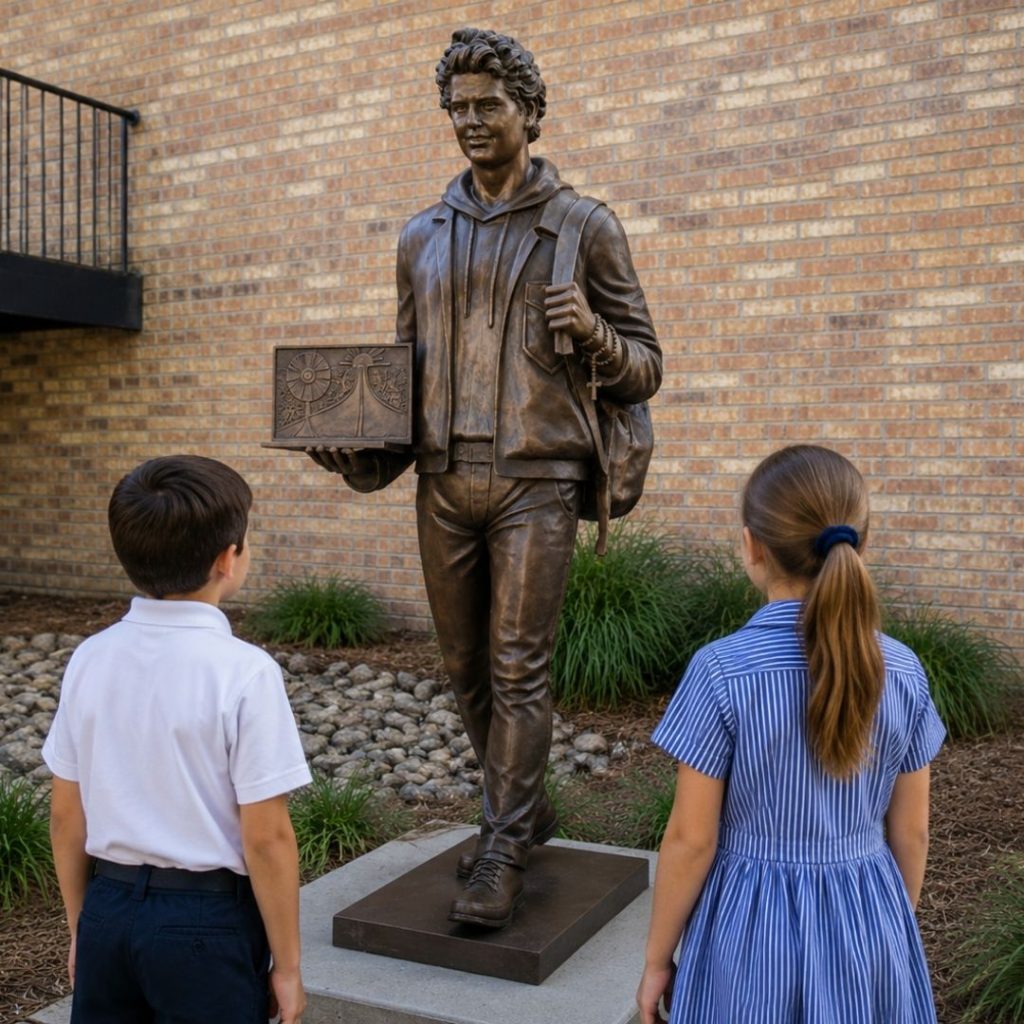
Every Catholic school seeks to form students academically, morally, and spiritually. While curriculum and faculty play a central role in that mission, the physical environment of a school also teaches. The symbols students encounter every day communicate powerful messages about what matters. A crucifix in a hallway. A statue of Mary near the entrance. A patron saint overlooking a courtyard. A prayer garden where students can pause for reflection. These elements do more than beautify a campus. They help create an environment where faith becomes part of everyday life. Thoughtfully designed Catholic school statues remind students that holiness is real, attainable, and relevant. They transform ordinary spaces into places of encounter, reflection, and learning. In a world filled with distractions, sacred art quietly and consistently points students back toward Christ. The Campus Itself Becomes a Teacher Students spend thousands of hours on a school campus during their educational journey. Every space communicates values. A campus filled with generic buildings teaches one lesson. A campus enriched with sacred art teaches another. When students see visual reminders of faith throughout their day, they begin to understand that Catholicism is not simply a subject taught in religion class. It is a way of life. Sacred art reinforces this message. A statue near the front entrance welcomes students into a distinctly Catholic environment. A Marian shrine offers a place for prayer. A saint in the school courtyard serves as a daily reminder of virtue, courage, and discipleship. The entire Catholic school campus becomes part of the educational experience. Different Saints Teach Different Lessons One of the greatest strengths of sacred art is that every saint has something unique to teach. The right sculpture can reinforce a specific aspect of a school’s mission while providing students with inspiring examples of Christian living. Saint Carlo Acutis: Holiness for the Digital Age Today’s students have never known a world without technology. That is one reason Saint Carlo Acutis resonates so deeply with young people. Carlo enjoyed computers, video games, and the internet. Yet he also developed a profound love for the Eucharist and used technology as a tool for evangelization. His life demonstrates that holiness is possible in the modern world. Students see that sainthood is not reserved for people who lived centuries ago. It is a calling that remains relevant today. At St. Ignatius Parish in Mobile, Alabama, the installation of the Highway to Heaven sculpture has become a focal point for student formation, helping young people encounter the story of a saint who looks remarkably like someone they might know. Saint Carlo Acutis demonstrates that sainthood is not confined to the distant past. His love for technology, combined with his devotion to the Eucharist, makes him especially relatable to today’s students. A Carlo Acutis sculpture can help young people see that faith and modern life are not competing realities but can work together in service of Christ. Saint Josephine Bakhita: Freedom, Dignity, and Hope After enduring slavery and profound suffering, Saint Josephine Bakhita became a powerful witness to forgiveness, hope, and freedom in Christ. Her example provides Catholic schools with opportunities to discuss human dignity, resilience, social justice, and the Church’s teaching that every person is created in the image and likeness of God. Few saints speak more directly to contemporary challenges than Saint Josephine Bakhita. Kidnapped as a child and sold into slavery, Bakhita endured profound suffering before eventually finding freedom and embracing the Catholic faith. Her story is remarkable not only because of what she experienced, but because of how she responded. Rather than becoming consumed by bitterness, she became a witness to forgiveness, joy, and hope. For Catholic schools, her life creates opportunities to discuss: Students face their own challenges, disappointments, and struggles. Bakhita’s example reminds them that suffering does not define a person and that every individual possesses a God-given dignity that can never be taken away. The African American Madonna and Child: Reflecting the Universal Church The Catholic Church embraces people from every culture, language, and nation. An African American Madonna and Child helps communicate this reality while creating opportunities for discussions about the universality of the Church, cultural expressions of faith, and the dignity of every human person. Such artwork can foster both belonging and appreciation for the global Catholic community. The Catholic Church is truly universal. It includes people from every nation, culture, language, and ethnicity. Sacred art can help students understand this reality. An African American Madonna and Child reminds students that Christ came for all people and that the Gospel transcends every cultural boundary. For many students, culturally diverse sacred art creates an immediate sense of belonging and connection. For others, it provides an opportunity to appreciate the richness and diversity of the global Church. Such installations can support discussions about: At a time when Catholic schools seek to build strong and welcoming communities, sacred art can help students see themselves as part of something much larger than their local campus. Saint James the Greater: Patron of the Journey For centuries, Christians have sought the intercession of Saint James while undertaking both physical and spiritual journeys. On a Catholic school campus, his presence can remind students that education itself is a pilgrimage. As they grow academically, personally, and spiritually, students are encouraged to seek the guidance and prayers of the saints who accompany them on the path toward Christ. Every student is on a journey. They arrive as children and leave as young adults prepared for the next chapter of their lives. Saint James the Greater has long been recognized as the patron saint of pilgrims and travelers. For centuries, Christians have sought his intercession while undertaking both physical and spiritual journeys. A sculpture of Saint James can serve as a powerful reminder that education itself is a pilgrimage. Students face academic challenges, personal growth, vocational discernment, and the gradual discovery of who God is calling them to become. Saint James reminds them that they do not travel this road alone. His presence on a