
Choosing the Right Material for Your Sacred Art: Why the Best Choice Depends on Your Ministry
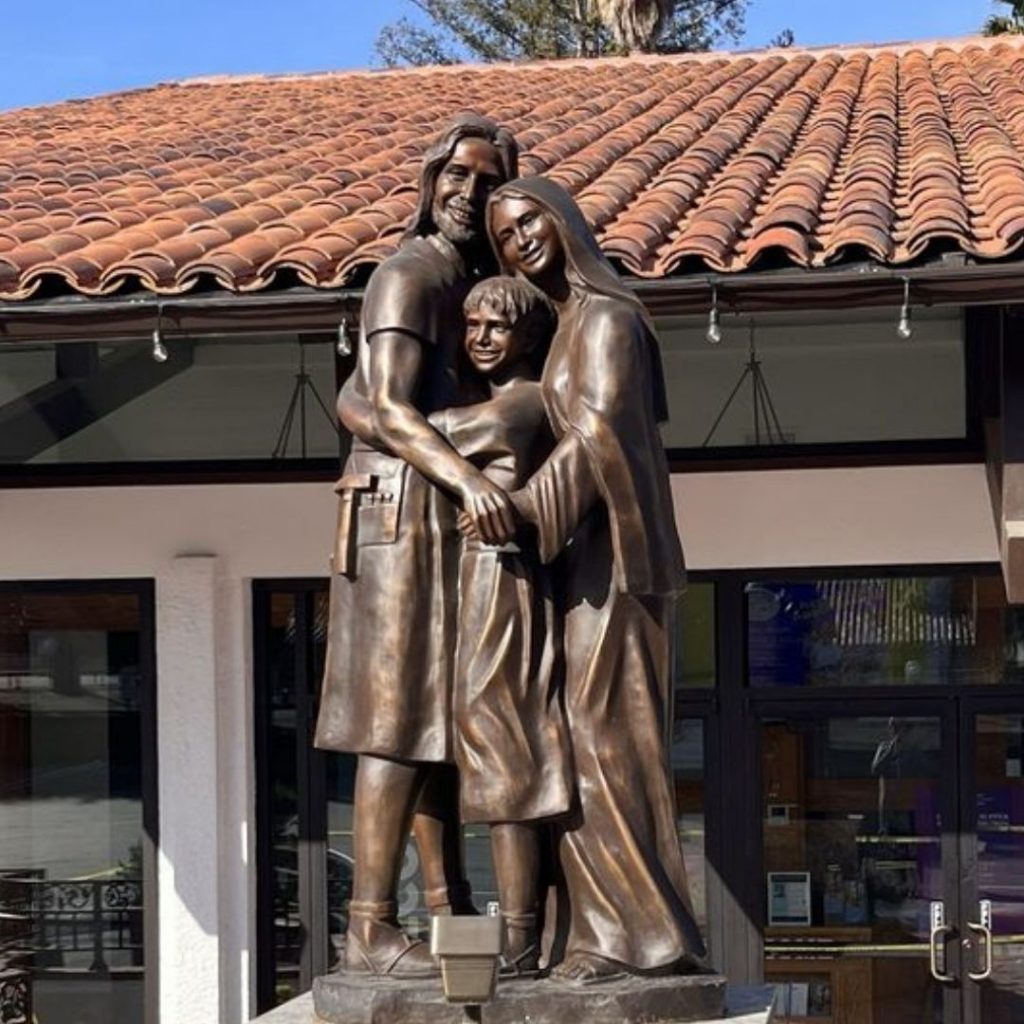
Every sacred sculpture begins with a ministry, not a material. Before discussing bronze, fiberglass, or resin stone, St. Joseph Mission first asked what image would best express its identity as the Shrine of St. Joseph. That theological vision shaped every artistic and material decision that followed. The conversation often begins the same way. A parish is planning a new sculpture. A donor has stepped forward. The building committee gathers around the conference table. Before long, someone asks what seems to be the obvious question: “Should we use bronze?” It is a perfectly reasonable place to begin—but it is rarely the right one. The more important questions are almost always pastoral before they are practical. Where will the sculpture be located? What role will it play in the life of the parish? Who will encounter it each day? How should it relate to the surrounding architecture? What theological message should it communicate? How long should it serve the community? Only after those questions have been thoughtfully answered does the discussion naturally turn to materials. At Indweller Artistic, every religious sculpture commission begins with those larger conversations. Whether designing Catholic church statues for a parish entrance, a Catholic school sculpture for a campus, or a devotional image for a hospital or retreat center, the goal is never simply to determine which material is “best.” The goal is to discover which material best serves the ministry. That distinction changes everything. Theological Vision Comes Before Material Selection One project beautifully illustrates this principle. Several years ago, St. Joseph Mission in Fremont, California—which also serves as the Shrine of St. Joseph—began considering a new sculpture for the church entrance. The obvious discussion could have centered on bronze, fiberglass, or resin stone. Instead, the parish asked a much deeper question: What image of St. Joseph should welcome every person who enters this church? Because the parish is dedicated to St. Joseph, it already possessed several traditional depictions of him. There were images of Joseph caring for the Christ Child and scenes connected with the Nativity. Rather than commissioning another familiar representation, the pastor envisioned revealing another dimension of Joseph’s vocation. He wanted parishioners to encounter Joseph not only as the guardian of the Holy Family during extraordinary moments of salvation history, but as an ordinary husband and father living the quiet holiness of everyday family life. That theological vision shaped every artistic decision that followed. Instead of depicting Jesus as an infant, Indweller Artistic designed a sculpture portraying Him as a young boy. Joseph and Mary are shown sharing the ordinary joy of family life rather than a dramatic biblical event. Their gently touching heads and joined hands subtly create the outline of a heart, while Christ stands at its center. The title, Heart of a Happy Family, reflects this symbolism on two levels. The family itself forms the shape of a heart, while Jesus is revealed as the true heart of the family—and, ultimately, the heart of every Christian home. The sculpture also complements the mission’s beautiful Spanish-style California architecture, becoming part of the church rather than merely something placed in front of it. Only after these pastoral, theological, and architectural decisions had been made did the discussion of materials become meaningful. That sequence is worth remembering because it reflects how successful sacred art projects almost always unfold. Material selection follows mission—not the other way around. Bronze: When Permanence Serves the Mission There is a reason bronze has remained the standard for monumental sculpture for thousands of years. A finely crafted piece of bronze religious sculpture possesses an unmistakable sense of permanence. It ages gracefully, develops a beautiful natural patina, and often becomes woven into the identity of a parish or institution. Bronze conveys confidence, stability, and legacy. For many Catholic ministries, these qualities make it the ideal choice. A church entrance statue welcoming worshippers every Sunday, a memorial in a Catholic cemetery, or a prominent sculpture anchoring a university campus often benefits from bronze’s enduring presence. Donors frequently appreciate knowing their gift has the potential to inspire generations of future parishioners and students. Bronze also performs exceptionally well outdoors. Properly cast and maintained, it withstands decades of changing weather while requiring relatively modest long-term care. Yet bronze should never be selected simply because it is considered the premium material. Its weight influences every stage of a project. Structural engineering, reinforced foundations, specialized transportation, crane access, installation logistics, and insurance considerations all become part of the discussion. In some situations, those additional requirements are entirely appropriate. In others, they may divert resources from the ministry itself. The question is never whether bronze is better. The question is whether bronze best serves the project. White Fiberglass & Resin Stone: Different Materials, Shared Advantages White fiberglass and resin stone occupy an important place in contemporary Catholic sculpture, not because they are inexpensive alternatives, but because they often solve problems that bronze cannot. Both preserve the sculptural detail of the original artwork while offering significantly lighter weight than cast bronze. They simplify transportation, reduce structural demands, and make installation possible in locations where bronze may be impractical or even impossible. For churches with elevated niches, schools with structural limitations, hospitals seeking minimal disruption during installation, or ministries shipping artwork across long distances, these advantages can become decisive. The primary distinction between the two lies in appearance rather than purpose. White fiberglass offers the bright, timeless finish familiar in many churches, while resin stone provides a warmer, stone-like character well suited to devotional interiors and protected environments. Neither should be viewed as a compromise. For many ministries, they are simply the better solution. One recent project at Good Shepherd Catholic Parish in Visalia, California illustrates why. The parish commissioned a pair of entrance angels to occupy architectural niches approximately thirty feet above the church entrances. While bronze initially seemed like the obvious choice, the engineering realities suggested otherwise. Two life-size bronze sculptures at that height would have dramatically increased structural loading and installation complexity. Instead, the parish selected