
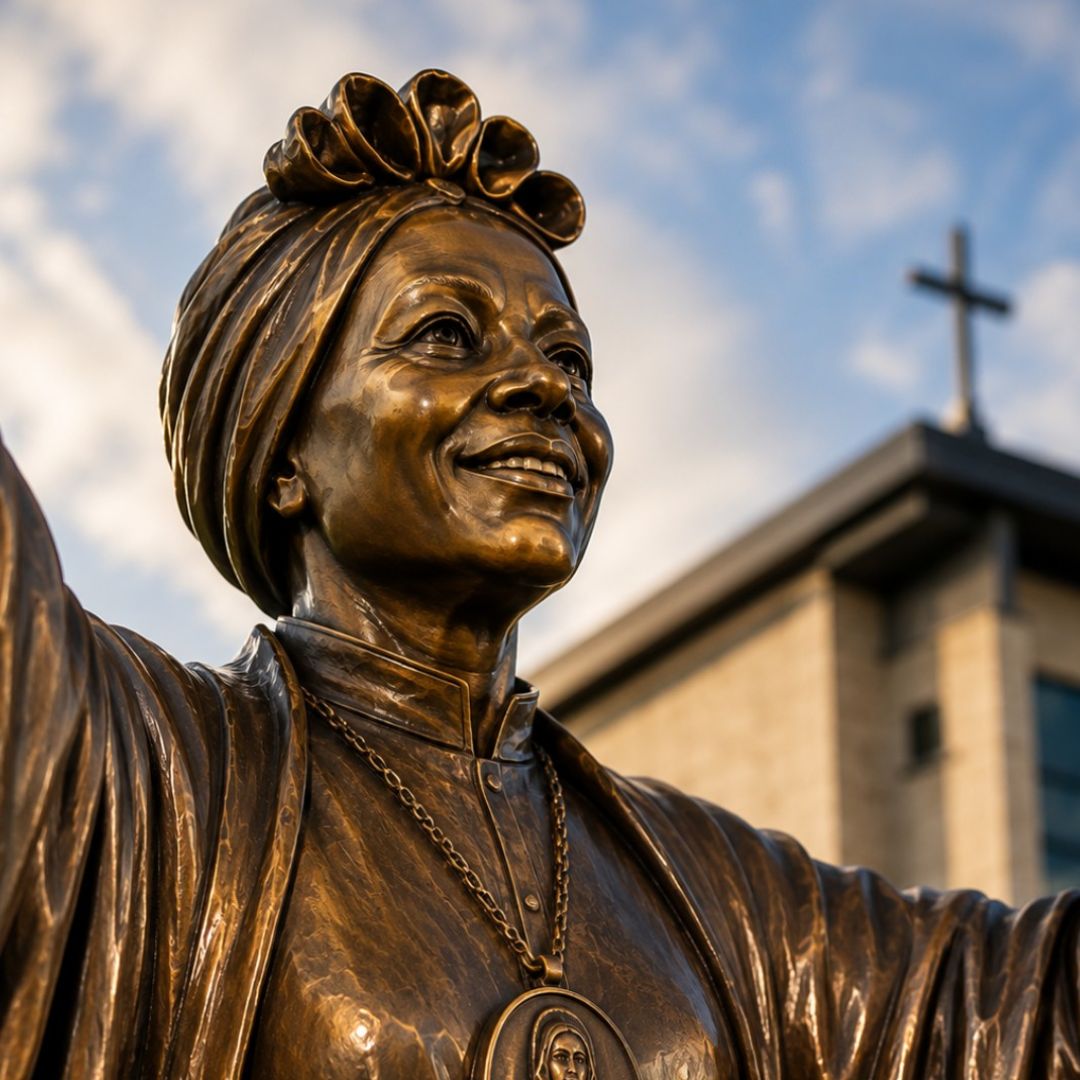
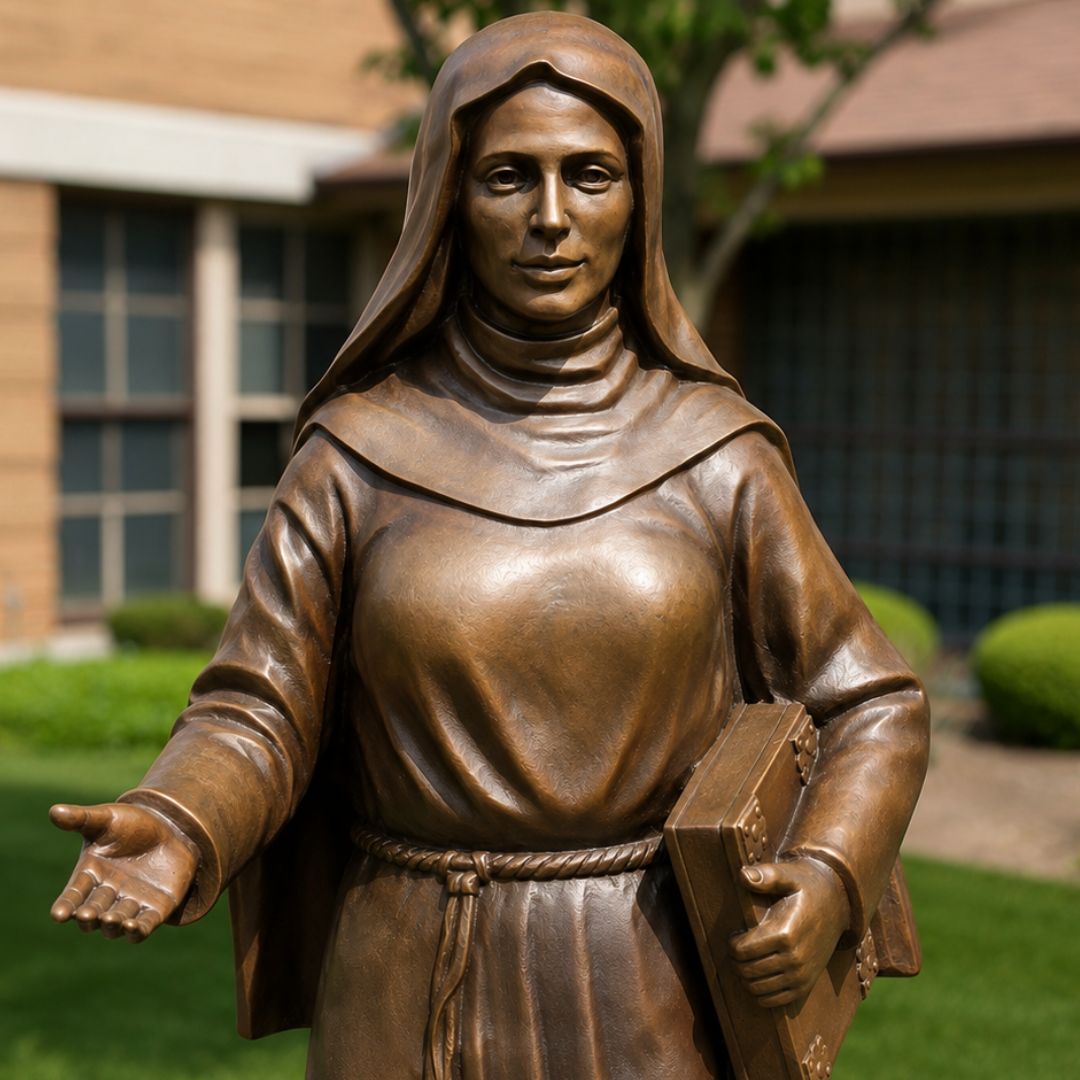
Every Catholic school seeks to form students academically, morally, and spiritually. While curriculum and faculty play a central role in that mission, the physical environment of a school also teaches. The symbols students encounter every day communicate powerful messages about what matters.
A crucifix in a hallway. A statue of Mary near the entrance. A patron saint overlooking a courtyard. A prayer garden where students can pause for reflection. These elements do more than beautify a campus. They help create an environment where faith becomes part of everyday life.
Thoughtfully designed Catholic school statues remind students that holiness is real, attainable, and relevant. They transform ordinary spaces into places of encounter, reflection, and learning. In a world filled with distractions, sacred art quietly and consistently points students back toward Christ.
The Campus Itself Becomes a Teacher
Students spend thousands of hours on a school campus during their educational journey. Every space communicates values. A campus filled with generic buildings teaches one lesson. A campus enriched with sacred art teaches another.
When students see visual reminders of faith throughout their day, they begin to understand that Catholicism is not simply a subject taught in religion class. It is a way of life.
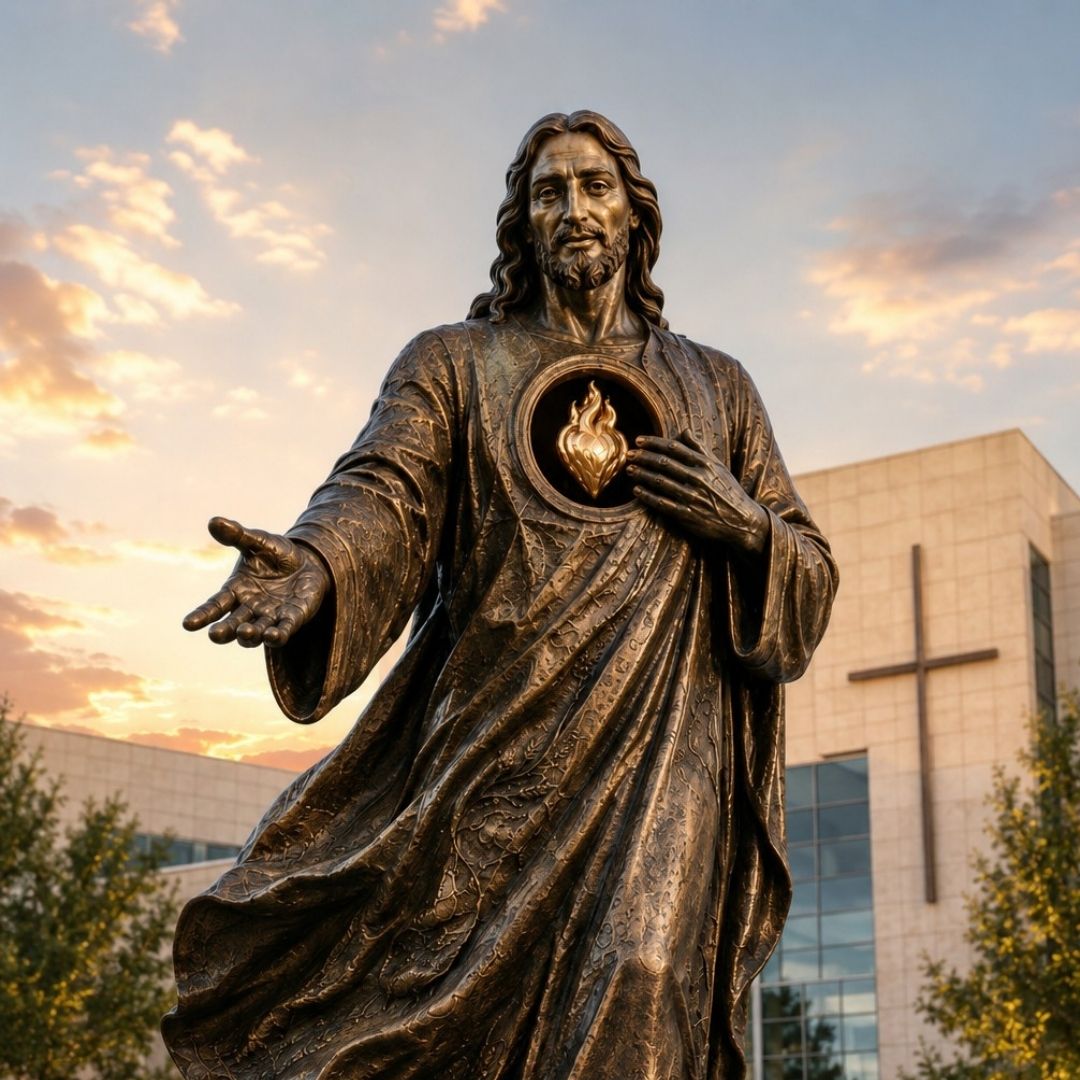
Sacred art reinforces this message. A statue near the front entrance welcomes students into a distinctly Catholic environment. A Marian shrine offers a place for prayer. A saint in the school courtyard serves as a daily reminder of virtue, courage, and discipleship. The entire Catholic school campus becomes part of the educational experience.
Different Saints Teach Different Lessons
One of the greatest strengths of sacred art is that every saint has something unique to teach. The right sculpture can reinforce a specific aspect of a school’s mission while providing students with inspiring examples of Christian living.
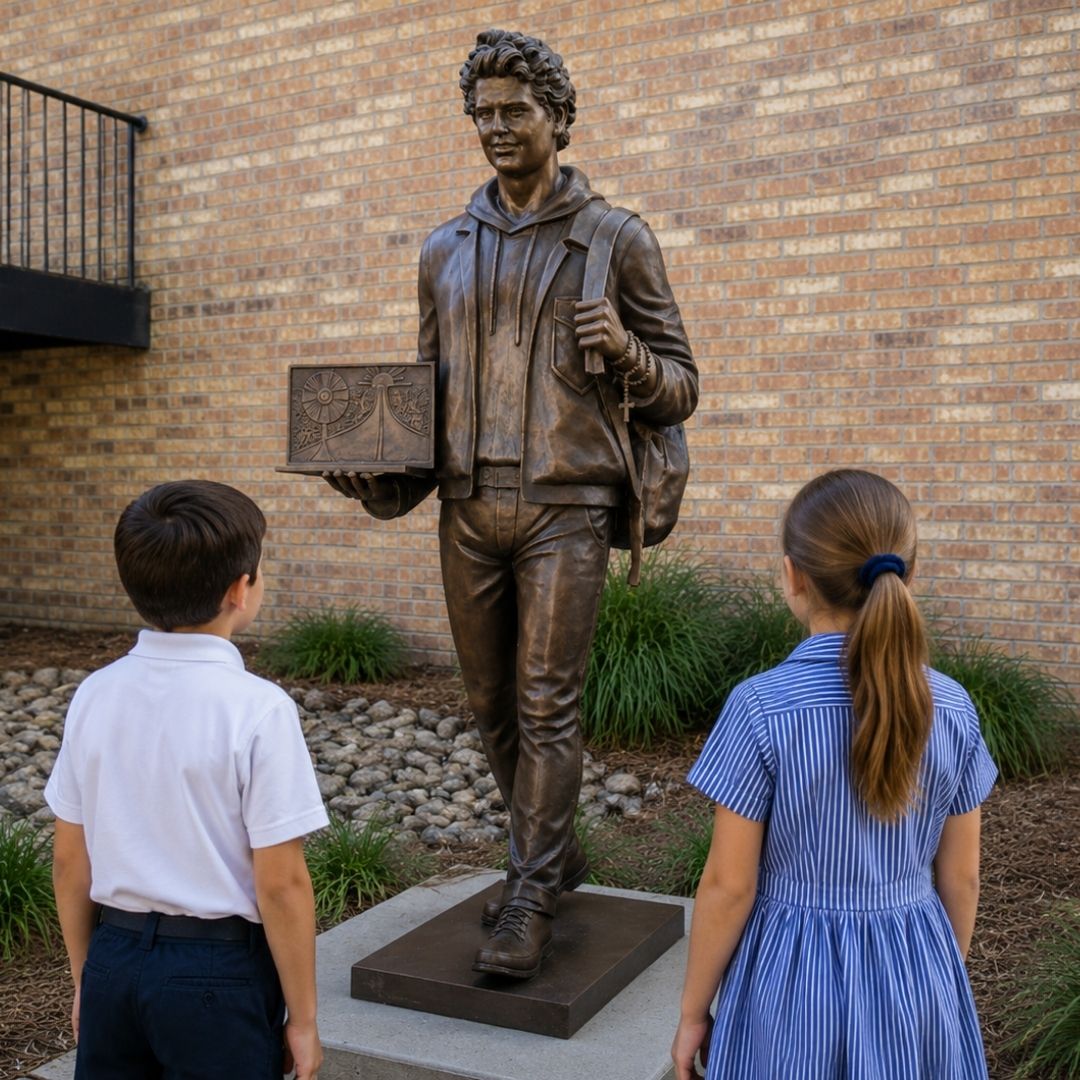
Saint Carlo Acutis: Holiness for the Digital Age
Today’s students have never known a world without technology. That is one reason Saint Carlo Acutis resonates so deeply with young people.
Carlo enjoyed computers, video games, and the internet. Yet he also developed a profound love for the Eucharist and used technology as a tool for evangelization. His life demonstrates that holiness is possible in the modern world.
Students see that sainthood is not reserved for people who lived centuries ago. It is a calling that remains relevant today. At St. Ignatius Parish in Mobile, Alabama, the installation of the Highway to Heaven sculpture has become a focal point for student formation, helping young people encounter the story of a saint who looks remarkably like someone they might know.
Saint Carlo Acutis demonstrates that sainthood is not confined to the distant past. His love for technology, combined with his devotion to the Eucharist, makes him especially relatable to today’s students. A Carlo Acutis sculpture can help young people see that faith and modern life are not competing realities but can work together in service of Christ.
Saint Josephine Bakhita: Freedom, Dignity, and Hope
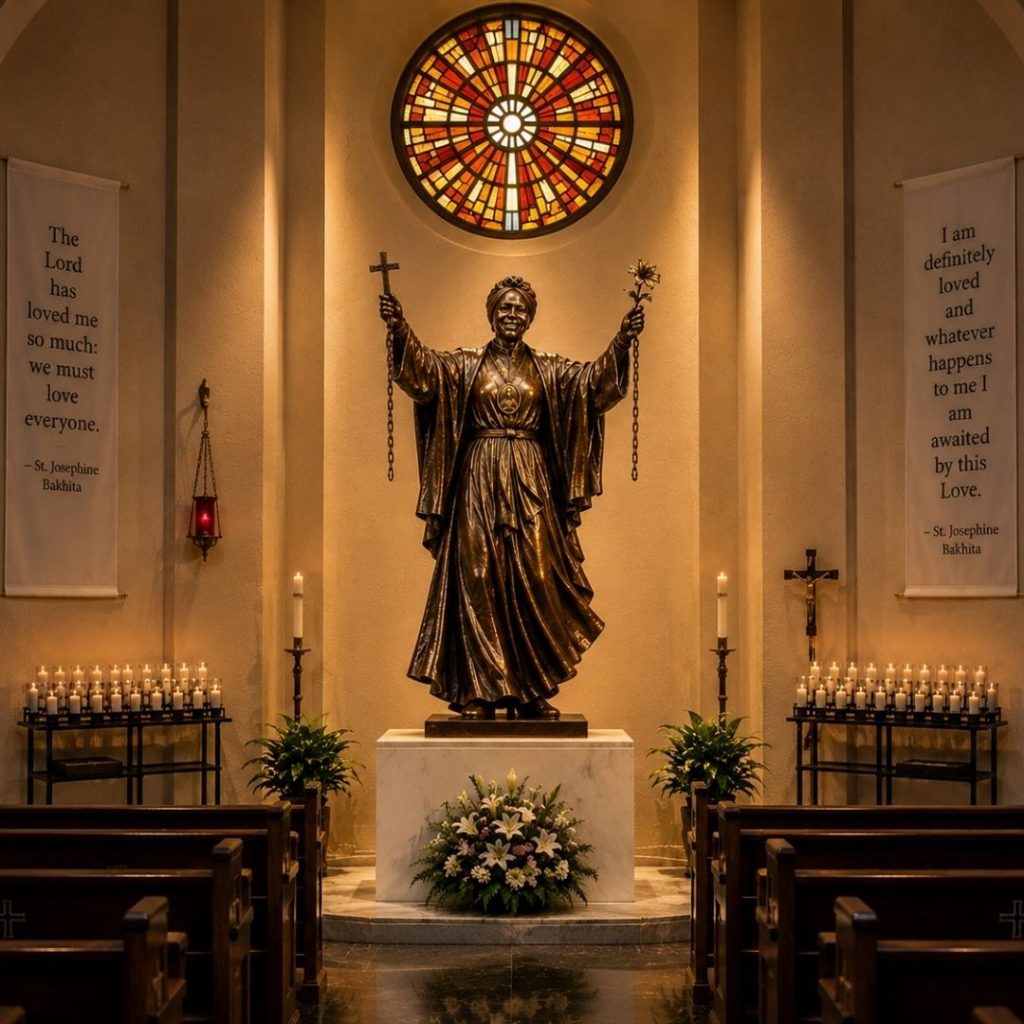
After enduring slavery and profound suffering, Saint Josephine Bakhita became a powerful witness to forgiveness, hope, and freedom in Christ. Her example provides Catholic schools with opportunities to discuss human dignity, resilience, social justice, and the Church’s teaching that every person is created in the image and likeness of God.
Few saints speak more directly to contemporary challenges than Saint Josephine Bakhita. Kidnapped as a child and sold into slavery, Bakhita endured profound suffering before eventually finding freedom and embracing the Catholic faith.
Her story is remarkable not only because of what she experienced, but because of how she responded. Rather than becoming consumed by bitterness, she became a witness to forgiveness, joy, and hope. For Catholic schools, her life creates opportunities to discuss:
- Human dignity
- Respect for every person
- Resilience in adversity
- Forgiveness and reconciliation
- Social justice rooted in Catholic teaching
- Freedom in Christ
Students face their own challenges, disappointments, and struggles. Bakhita’s example reminds them that suffering does not define a person and that every individual possesses a God-given dignity that can never be taken away.
The African American Madonna and Child: Reflecting the Universal Church
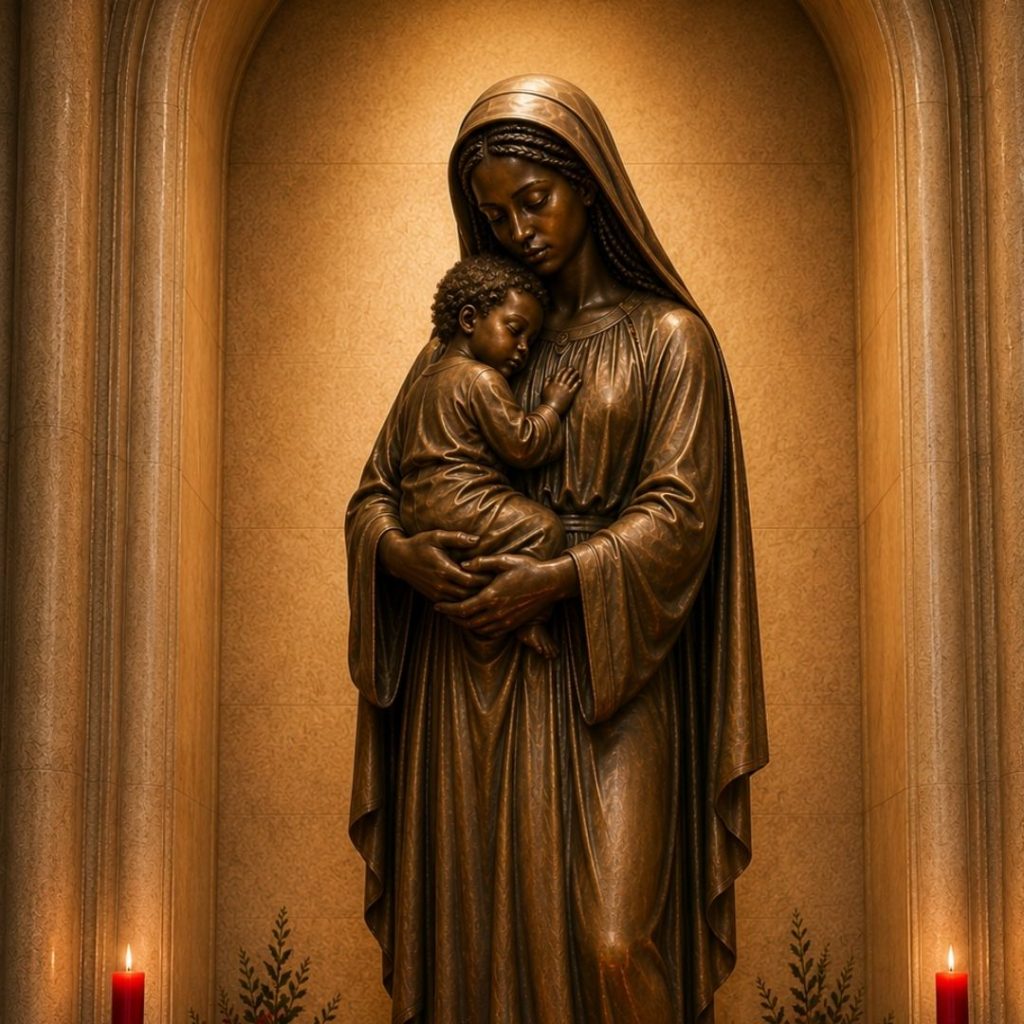
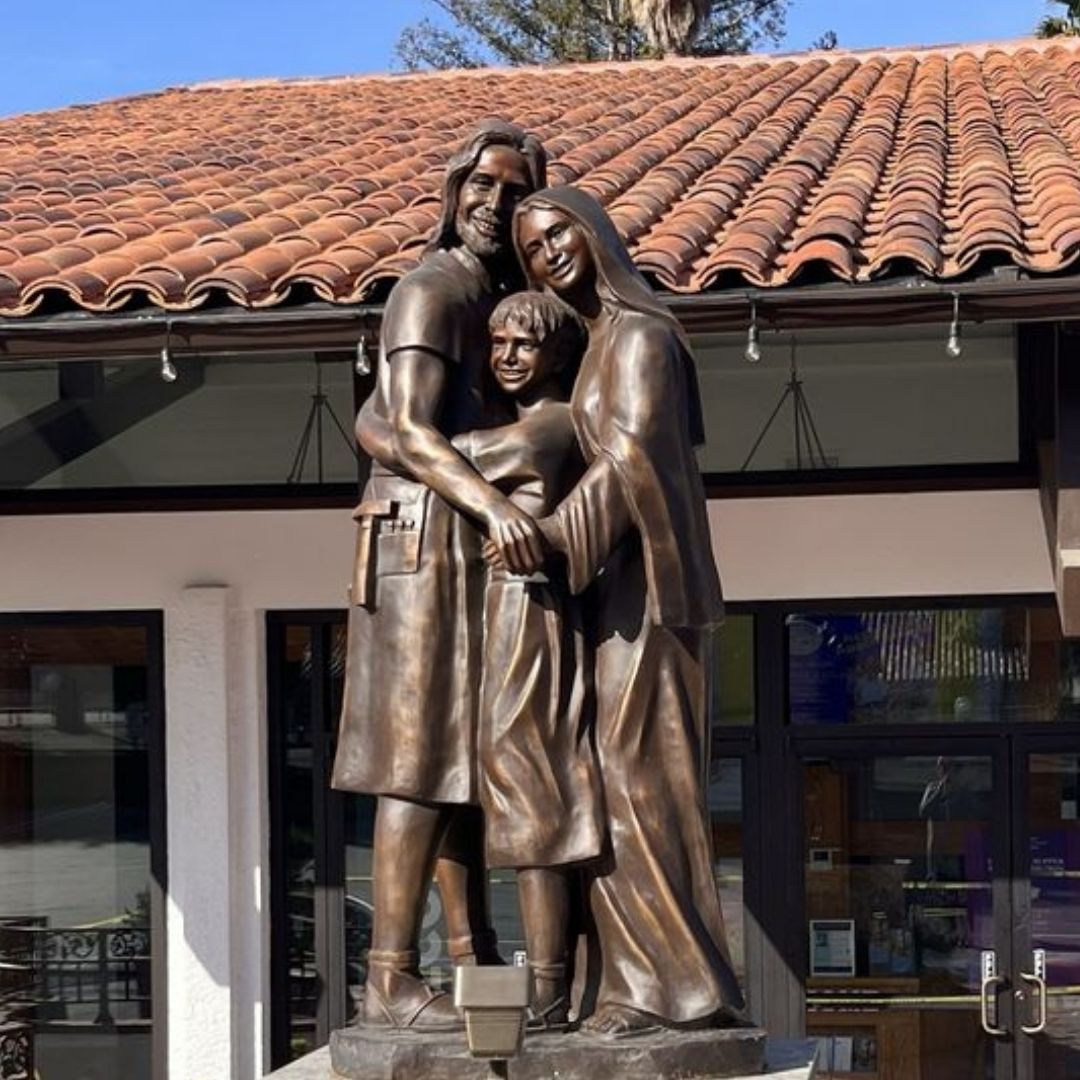
The Catholic Church embraces people from every culture, language, and nation. An African American Madonna and Child helps communicate this reality while creating opportunities for discussions about the universality of the Church, cultural expressions of faith, and the dignity of every human person. Such artwork can foster both belonging and appreciation for the global Catholic community.
The Catholic Church is truly universal. It includes people from every nation, culture, language, and ethnicity. Sacred art can help students understand this reality. An African American Madonna and Child reminds students that Christ came for all people and that the Gospel transcends every cultural boundary.
For many students, culturally diverse sacred art creates an immediate sense of belonging and connection. For others, it provides an opportunity to appreciate the richness and diversity of the global Church. Such installations can support discussions about:
- The universality of the Church
- Human dignity
- Cultural expressions of faith
- Unity amid diversity
- The global Catholic community
At a time when Catholic schools seek to build strong and welcoming communities, sacred art can help students see themselves as part of something much larger than their local campus.
Saint James the Greater: Patron of the Journey
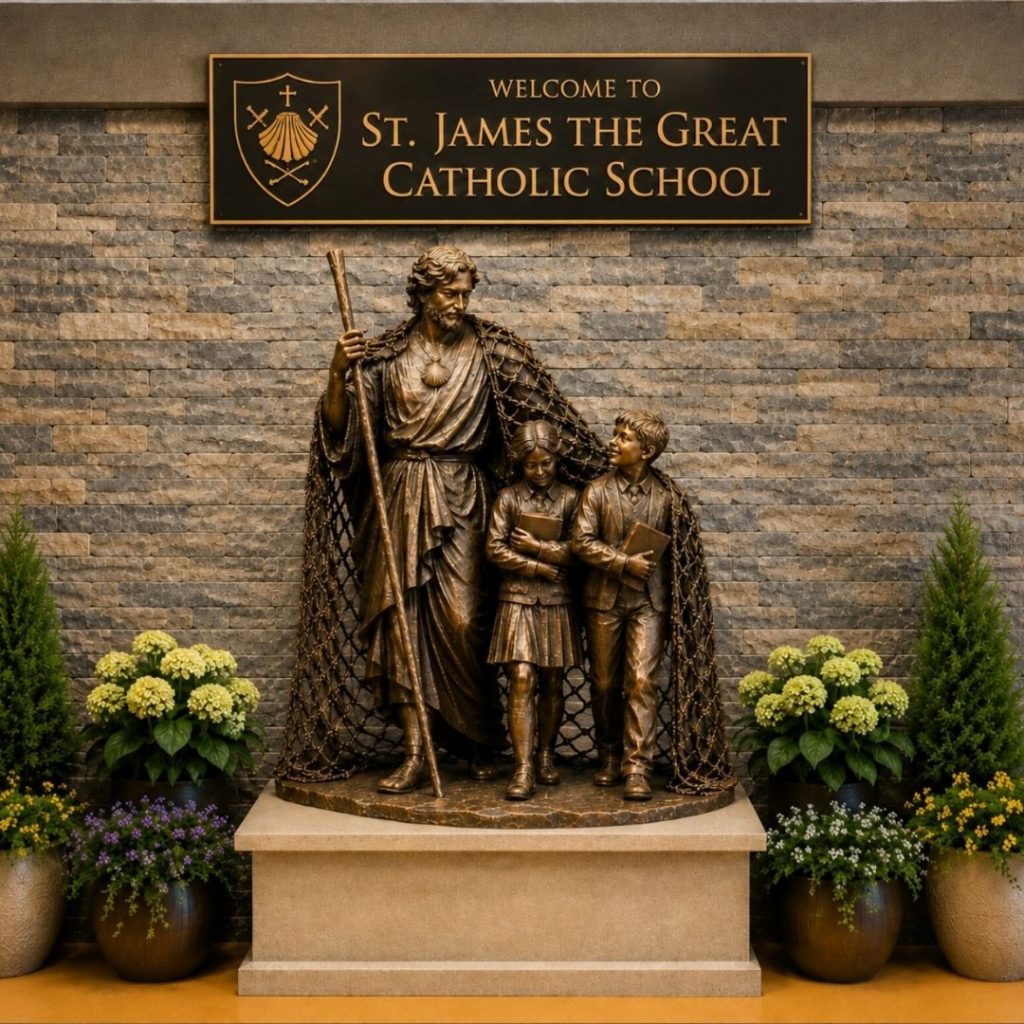
For centuries, Christians have sought the intercession of Saint James while undertaking both physical and spiritual journeys. On a Catholic school campus, his presence can remind students that education itself is a pilgrimage. As they grow academically, personally, and spiritually, students are encouraged to seek the guidance and prayers of the saints who accompany them on the path toward Christ.
Every student is on a journey. They arrive as children and leave as young adults prepared for the next chapter of their lives. Saint James the Greater has long been recognized as the patron saint of pilgrims and travelers. For centuries, Christians have sought his intercession while undertaking both physical and spiritual journeys.
A sculpture of Saint James can serve as a powerful reminder that education itself is a pilgrimage. Students face academic challenges, personal growth, vocational discernment, and the gradual discovery of who God is calling them to become. Saint James reminds them that they do not travel this road alone. His presence on a school campus encourages students to trust God throughout the journey and to seek the guidance and prayers of the saints along the way.
Saint John Bosco: A Champion of Young People
Few saints understood young people better than Saint John Bosco. His educational philosophy emphasized encouragement, relationship, and joy. Rather than focusing primarily on discipline and correction, Don Bosco believed that students flourish when they know they are loved and supported.
His life continues to inspire Catholic educators around the world. A statue of Saint John Bosco reminds students that they are valued, known, and called to greatness.
Saint Elizabeth Ann Seton: Patroness of Catholic Education
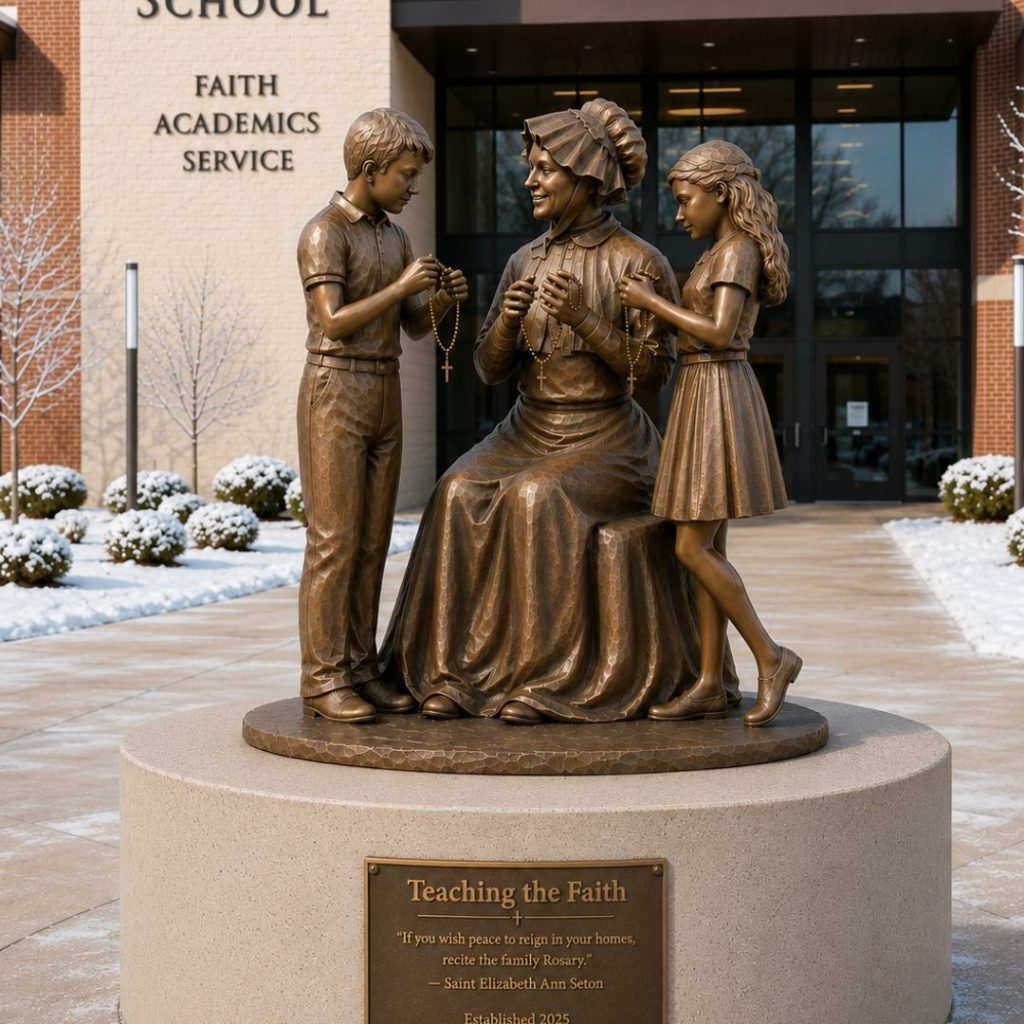
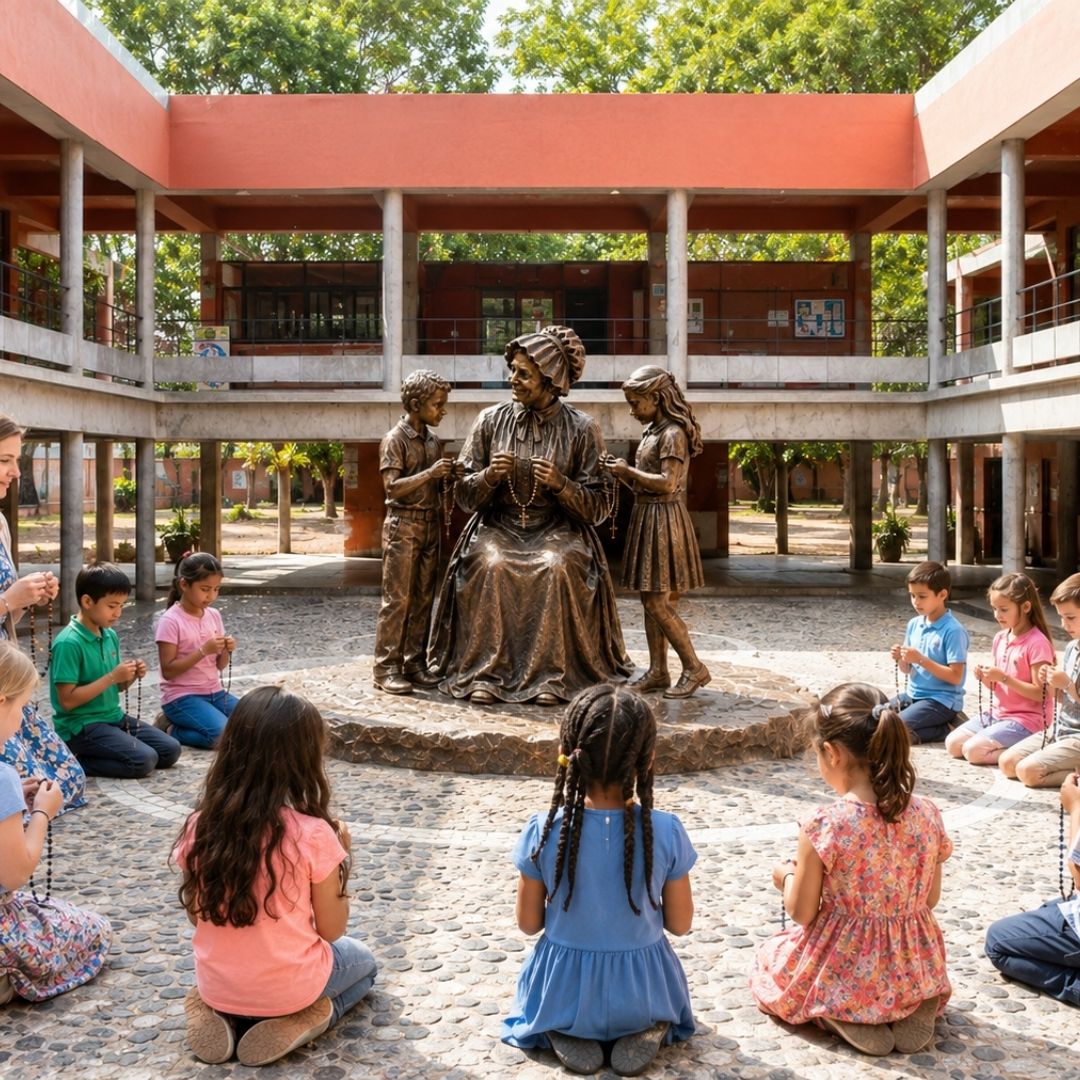
As the founder of the first Catholic school system in the United States, Saint Elizabeth Ann Seton remains one of the most influential figures in Catholic education. Her life reminds educators and students that academic excellence and spiritual formation belong together. A sculpture of Mother Seton visibly reinforces the educational mission of a Catholic school.
Saint Elizabeth Ann Seton holds a special place in the history of Catholic education. As the founder of the first Catholic school system in the United States, she helped establish a tradition that continues to shape generations of students. Her life reminds educators and families that academic excellence and spiritual formation belong together. For Catholic schools seeking to celebrate their educational mission, few saints are more fitting.
Teaching the Communion of Saints
One of the unique contributions sacred art makes to Catholic education is its ability to teach the Communion of Saints. The saints are not merely historical figures. Catholics believe that those who have entered Heaven remain united to the Church on earth. They continue to pray for us and intercede on our behalf.
Sacred art helps make this theological reality visible. A student may ask Saint Carlo Acutis for help growing closer to Christ. Another may turn to Saint Josephine Bakhita during a difficult season. A student discerning the future may seek the intercession of Saint James while navigating life’s journey. A child praying before Mary may ask for her maternal guidance and protection.
These experiences teach students that the saints are not distant heroes from the past. They are living members of the Church who accompany us through prayer. This understanding transforms sacred art from a memorial into a visible reminder of an ongoing spiritual relationship between the Church on earth and the Church in Heaven.
Sacred Art Creates Daily Opportunities for Encounter
One of the greatest advantages of outdoor sacred art is accessibility. A religion class occurs according to a schedule. A chapel may only be open at certain times. A sculpture on campus is available every day.
Students often develop personal relationships with these spaces. Some pause for prayer before an exam. Others gather with friends after school. Teachers use the artwork as a teaching tool. Campus ministers incorporate the space into retreats and prayer experiences.
Over time, these small moments become part of the culture of the school. The most successful installations become beloved landmarks remembered long after graduation.
Creating Spaces Students Actually Use
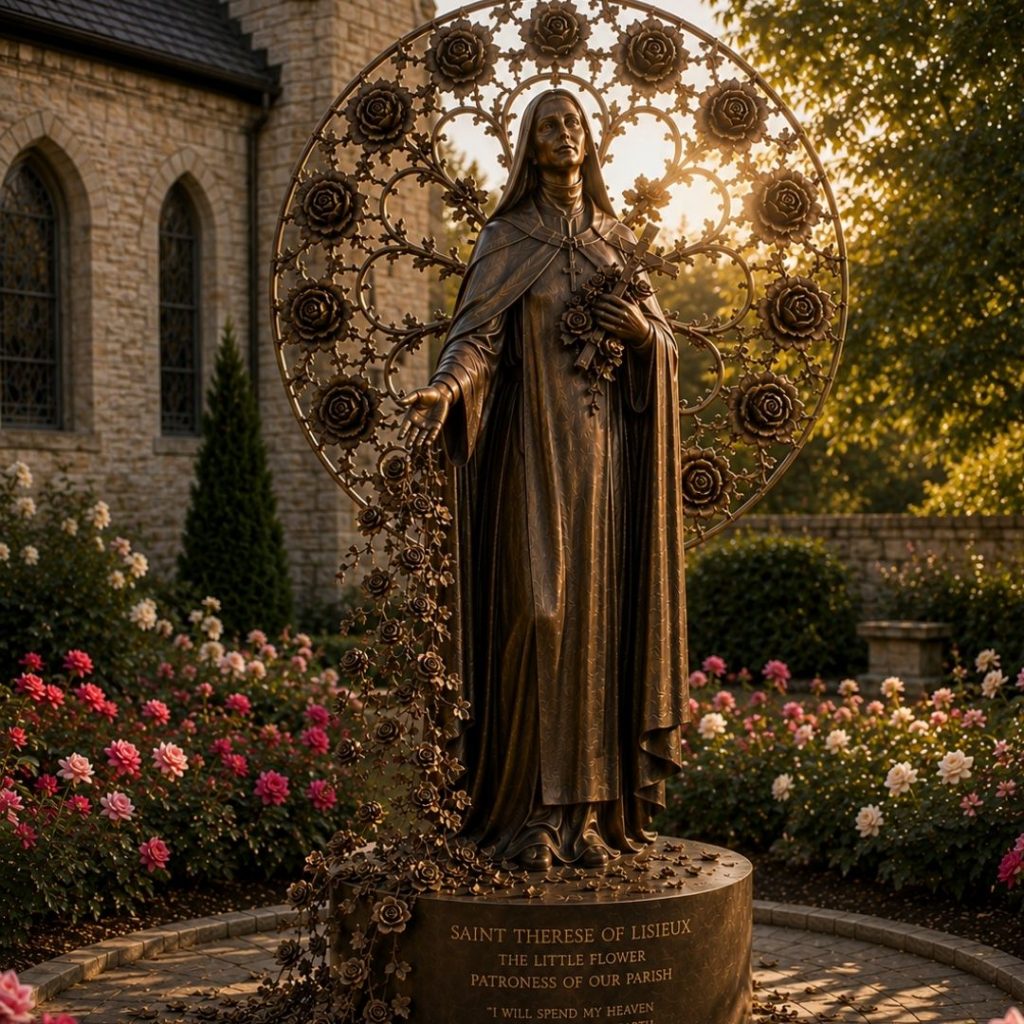
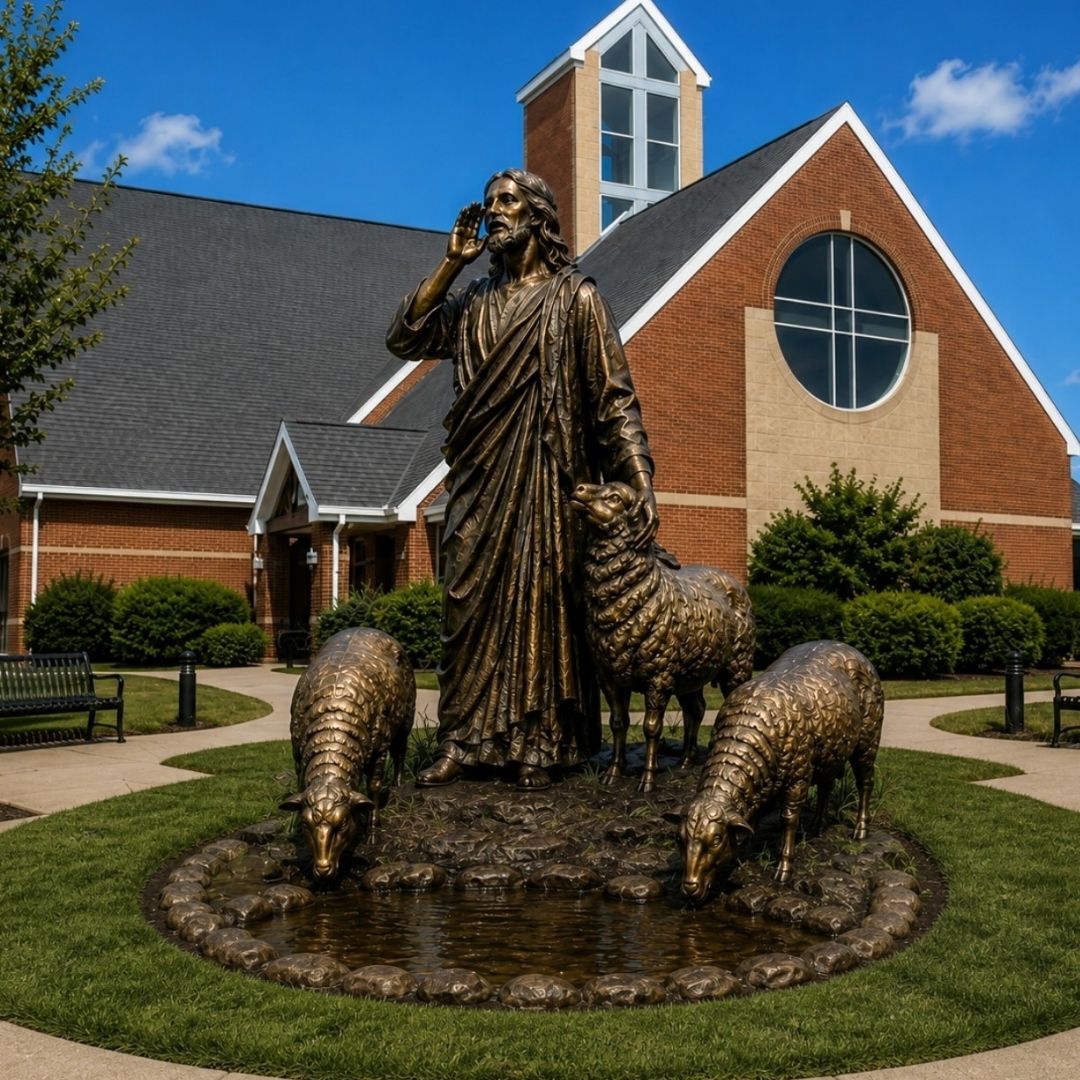
Some of the most successful sacred art projects become destinations rather than simply monuments. By combining sculpture, landscaping, seating, and pathways, Catholic schools can create prayer gardens that encourage students to pause, reflect, and encounter God amid the busyness of daily life. These spaces often become cherished parts of the campus experience.
The most effective sacred art projects rarely consist of a statue standing alone. Instead, they create destinations. When schools combine sculpture with thoughtful site design, they create places where students naturally gather. Popular features include:
- Benches
- Walkways
- Landscaping
- Prayer gardens
- Reflection areas
- Outdoor classrooms
A well-designed prayer garden often becomes one of the most frequently used spaces on campus. Students gather there to pray, reflect, study, and connect with friends. The result is an environment where faith becomes integrated into everyday student life.
Strengthening Catholic Identity for Families
Parents evaluating schools are looking for evidence that Catholic identity is more than a statement in a brochure. They want to see it lived. Sacred art helps communicate that commitment immediately.
A Marian shrine near the entrance. A patron saint welcoming visitors. A prayer garden filled with students. These visible signs communicate that faith is central to the life of the school. They help distinguish Catholic schools from their secular counterparts while reinforcing a sense of mission and purpose.
A Long-Term Investment in Mission
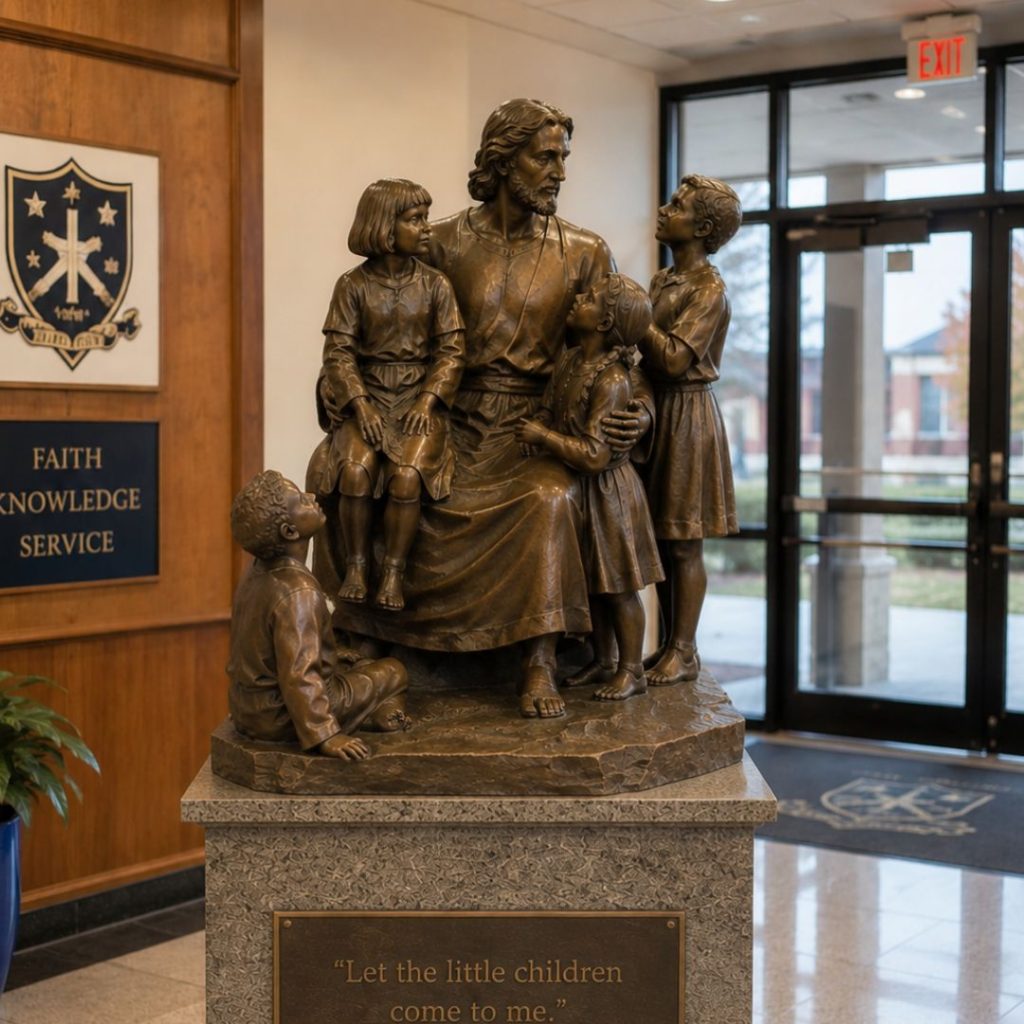
A Catholic school’s mission extends beyond academic achievement. Through prayer, formation, community, and sacred art, schools help students develop a lifelong relationship with Jesus Christ. Every saint, shrine, prayer garden, and campus monument ultimately points toward that encounter. Sacred art is most effective when it helps students recognize that Christ is present, welcoming them, guiding them, and calling them to follow Him.
Technology changes. Programs evolve. Buildings require renovation. Thoughtfully commissioned sacred art often serves a campus for generations. A sculpture can continue teaching, inspiring, evangelizing, and beautifying long after it is installed.
It supports faith formation. It strengthens Catholic identity. It creates gathering spaces. It enriches the educational environment. Few investments accomplish so many goals simultaneously.
Looking Ahead
The strongest Catholic schools understand that formation happens everywhere. Students are shaped not only by teachers and curriculum, but also by the environment around them. Sacred art helps transform ordinary spaces into places of encounter.
Saint Carlo Acutis teaches students that holiness is possible in the modern world. Saint Josephine Bakhita demonstrates the power of dignity, forgiveness, and hope. The African American Madonna and Child reflects the universality of the Church. Saint James reminds students that life is a pilgrimage and that the saints accompany them through prayer. Saint John Bosco inspires young people to pursue their God-given potential. Saint Elizabeth Ann Seton celebrates the enduring mission of Catholic education itself.
Together, these figures help create a campus where faith is visible, accessible, and woven into daily life. For schools seeking to strengthen Catholic identity, deepen faith formation, and create meaningful places for students, thoughtfully designed Catholic school statues remain one of the most powerful tools available.
Considering a sacred art project for your school? A thoughtfully designed sculpture, prayer garden, or patron saint installation can strengthen Catholic identity, support faith formation, and inspire students for generations to come.