
How One Parish Used Sacred Art to Inspire Students and Strengthen Catholic Identity
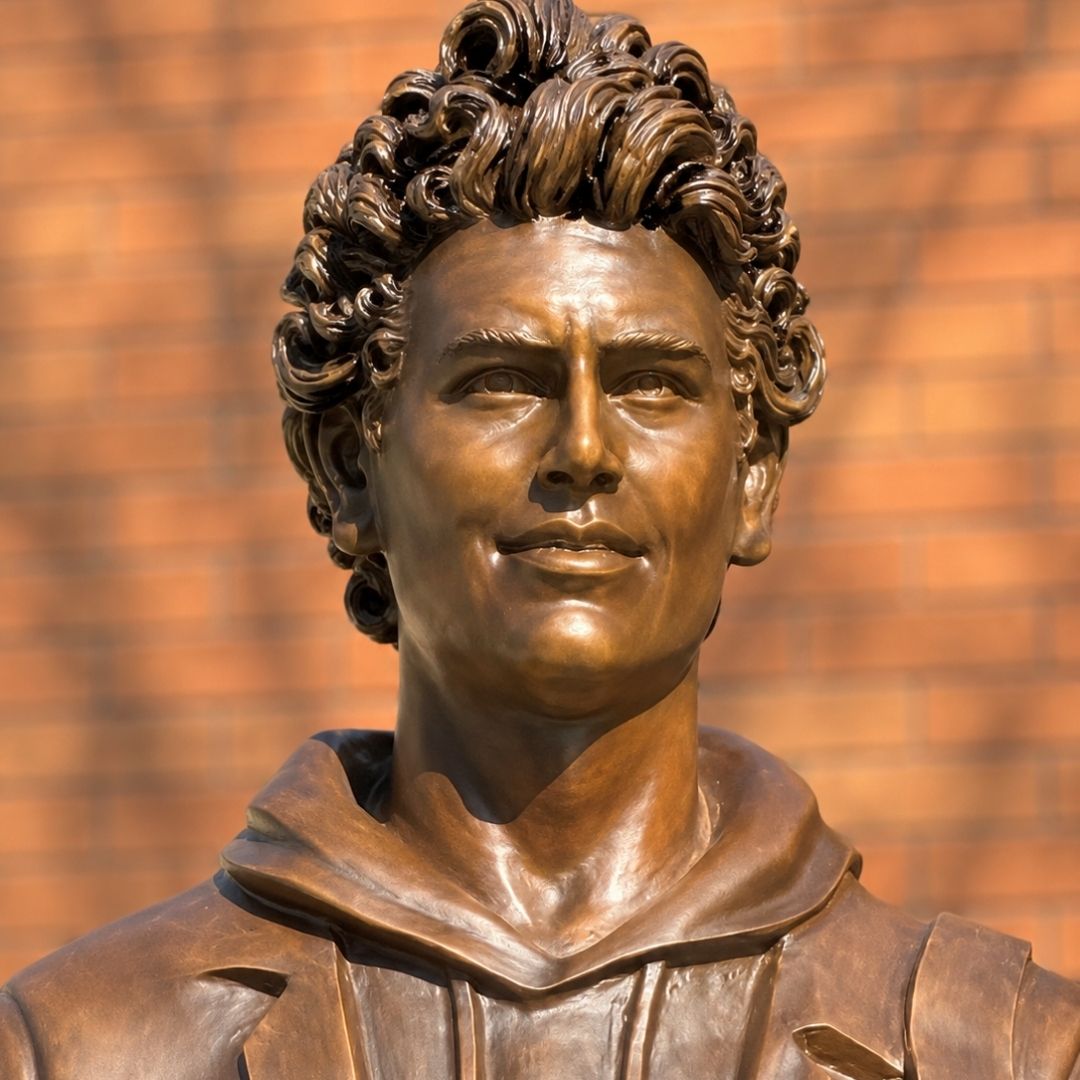
Installed at St. Ignatius Parish School in Mobile, Alabama, this life-sized bronze sculpture of Carlo Acutis serves as a visible reminder that sainthood is possible in our own time. Positioned along the route students take to Eucharistic Adoration, the monument reinforces Carlo’s message that the Eucharist is the path to Christ.
When churches and schools consider sacred art, the discussion often begins with a practical question: “Where should we place a statue?”
At St. Ignatius Parish in Mobile, Alabama, the question was different.
The parish was already blessed with a vibrant Catholic school, active sacramental life, and a weekly Eucharistic Adoration program attended by students. Every week, children walked from the school to the church to spend time before the Blessed Sacrament.
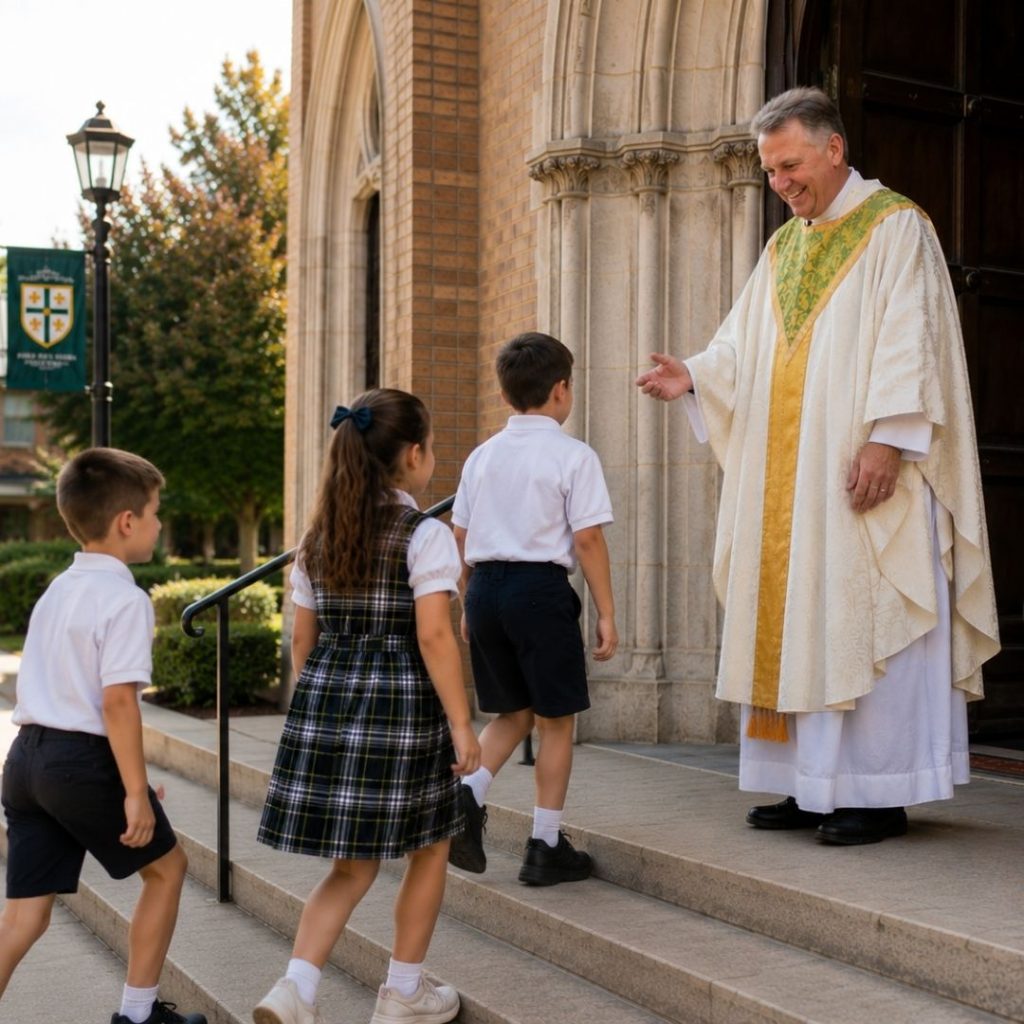
The success of the Carlo Acutis project began with a culture of faith already thriving at St. Ignatius. Students regularly participate in Mass, Eucharistic Adoration, and sacramental formation, creating an environment where sacred art becomes part of daily campus life.
The leadership at St. Ignatius recognized an opportunity.
What if that journey itself could become part of the spiritual experience?
What if sacred art could help students encounter a modern saint whose life spoke directly to the challenges of their generation?
The answer became a life-sized bronze statue of Saint Carlo Acutis, strategically installed along the route students travel each week on their way to Adoration.
Today, the sculpture serves as both a visual landmark and a powerful teaching tool, demonstrating how Catholic school statues can strengthen faith formation, enhance a campus, and create meaningful opportunities for encounter.
Why Carlo Acutis?
One of the challenges facing Catholic educators today is helping young people understand that holiness is possible in the modern world.
Many students can relate to saints who cared for the poor or served the Church heroically. Yet some struggle to see how those stories connect to their own lives.
Carlo Acutis changes that.
Born in 1991, Carlo loved computers, technology, soccer, friends, and ordinary teenage activities. Yet he also developed a deep devotion to the Eucharist and used modern technology to evangelize.
His famous statement, “The Eucharist is my highway to heaven,” has become one of the defining spiritual messages for a new generation of Catholics.
For St. Ignatius Parish, Carlo represented something unique: a modern saint whose life felt immediately accessible to students.
Rather than looking centuries into the past, students encounter someone who lived in a world remarkably similar to their own.
Identifying the Right Location
One of the most important decisions in any sacred art project is placement.
A sculpture can be beautifully designed and expertly crafted, yet fail to reach its potential if installed in the wrong location.
Rather than placing the Carlo Acutis statue in an isolated area of the property, parish leadership selected a location that students already pass during their weekly walk to Eucharistic Adoration.
This decision transformed the statue from an object to be observed into an experience to be encountered.
Each week, students naturally pass by Carlo on their journey toward Christ in the Eucharist. The placement reinforces Carlo’s own message without requiring a single word of explanation.
The sculpture becomes part of a larger spiritual journey.
This is one of the most effective principles in church beautification and church campus design: sacred art is most powerful when integrated into existing patterns of parish life.
A Sculpture Designed for Education
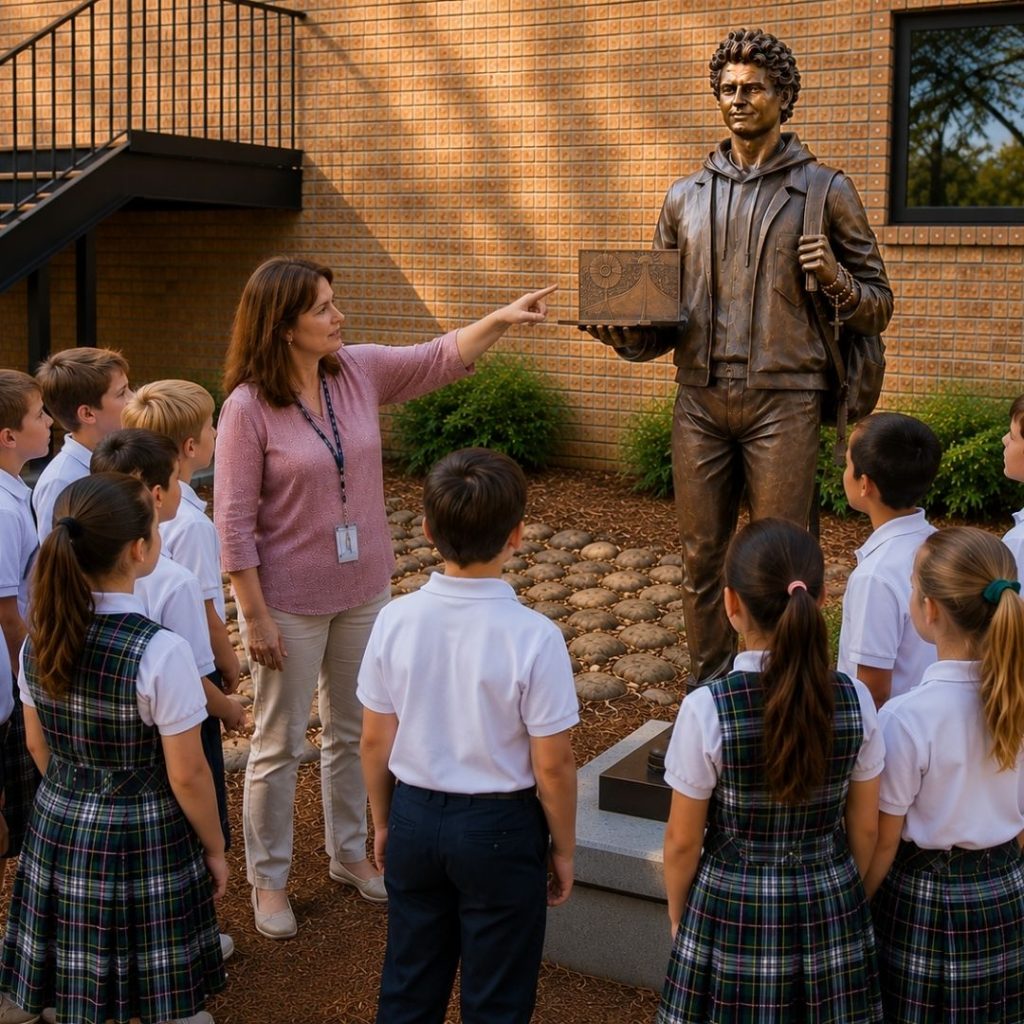
Sacred art has long played a role in Catholic education. By incorporating symbolism connected to Carlo’s life and spirituality, the monument becomes a catalyst for discussion, reflection, and faith formation among students.
The goal of the project was never simply to create a likeness of Carlo Acutis.
The sculpture was designed to communicate a story.
Titled Highway to Heaven, the monument incorporates visual elements connected to Carlo’s life and spirituality.
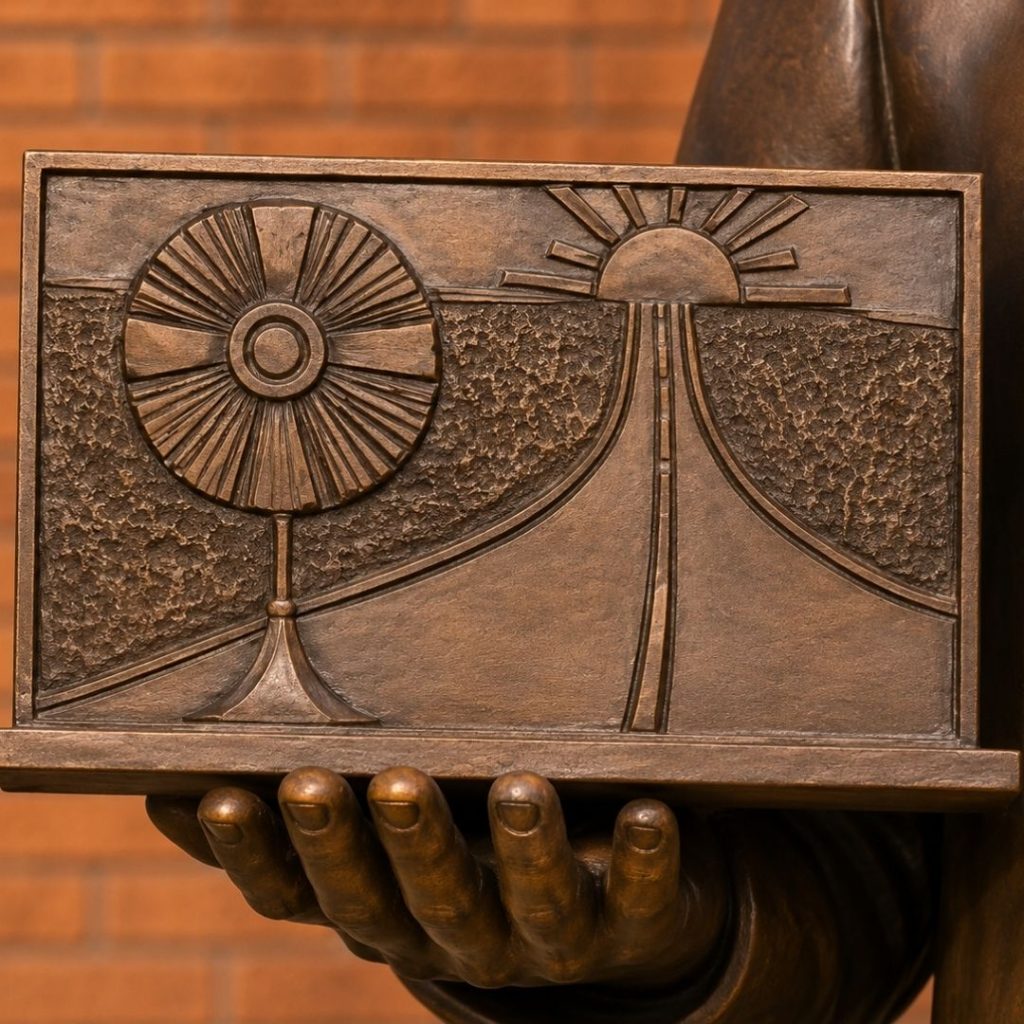
The symbolic laptop serves as one of the defining features of the monument. The monstrance references Carlo’s deep devotion to the Eucharist, while the highway recalls his famous statement that the Eucharist is his “highway to heaven.”
Students immediately recognize the modern characteristics that make Carlo relatable. His youthful appearance, approachable posture, and contemporary clothing distinguish him from many traditional saint statues.
At the same time, symbolic elements draw viewers toward deeper reflection.
The design references Carlo’s devotion to the Eucharist, his use of technology for evangelization, and his belief that ordinary people are called to extraordinary holiness.
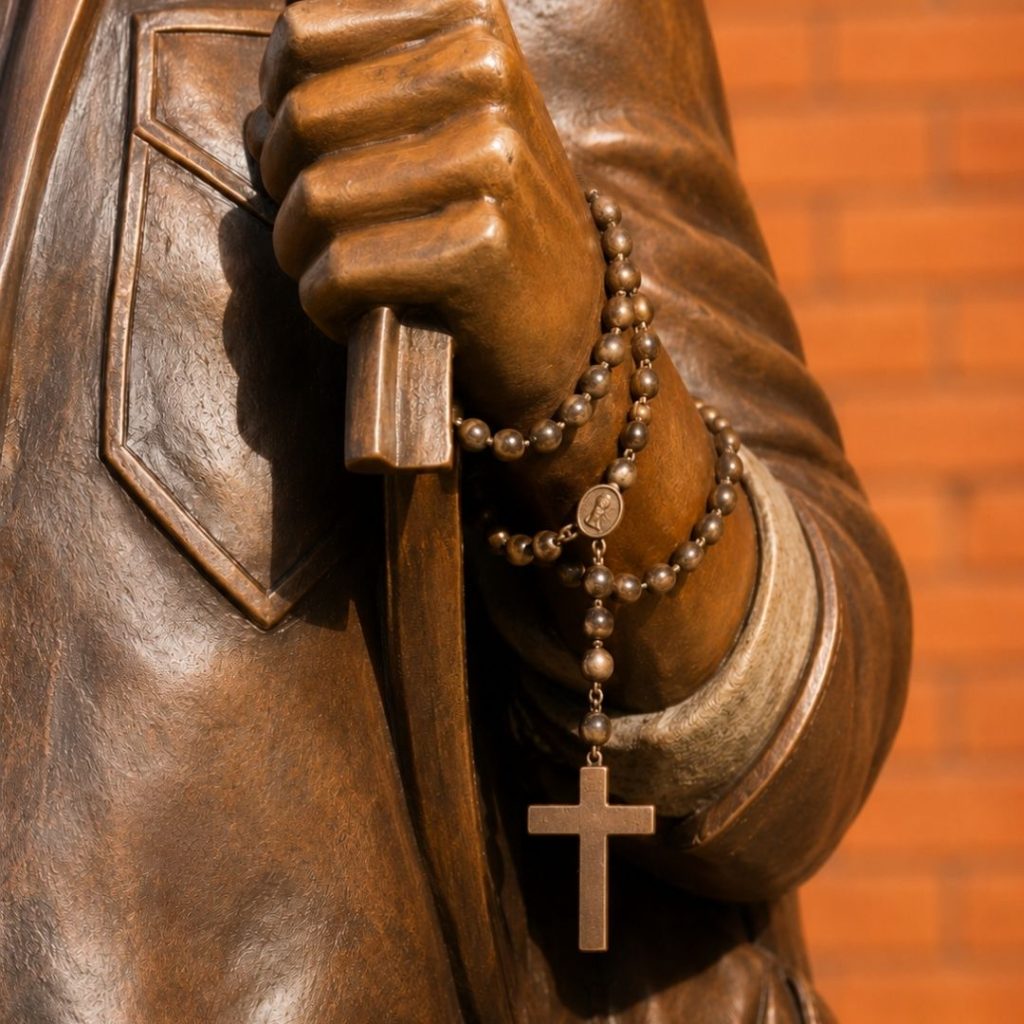
While Carlo is widely known for his Eucharistic devotion, he also maintained a strong devotion to the rosary. This detail reinforces the importance of prayer in the life of a young saint whose example continues to inspire students today.
As students encounter the sculpture repeatedly throughout the year, the artwork becomes a catalyst for discussion.
Teachers reference it. Parents ask questions about it. Visitors stop to learn more.
The result is sacred art functioning exactly as it has throughout Christian history—as a visual form of catechesis.
Creating a Church Pilgrimage Site for Students
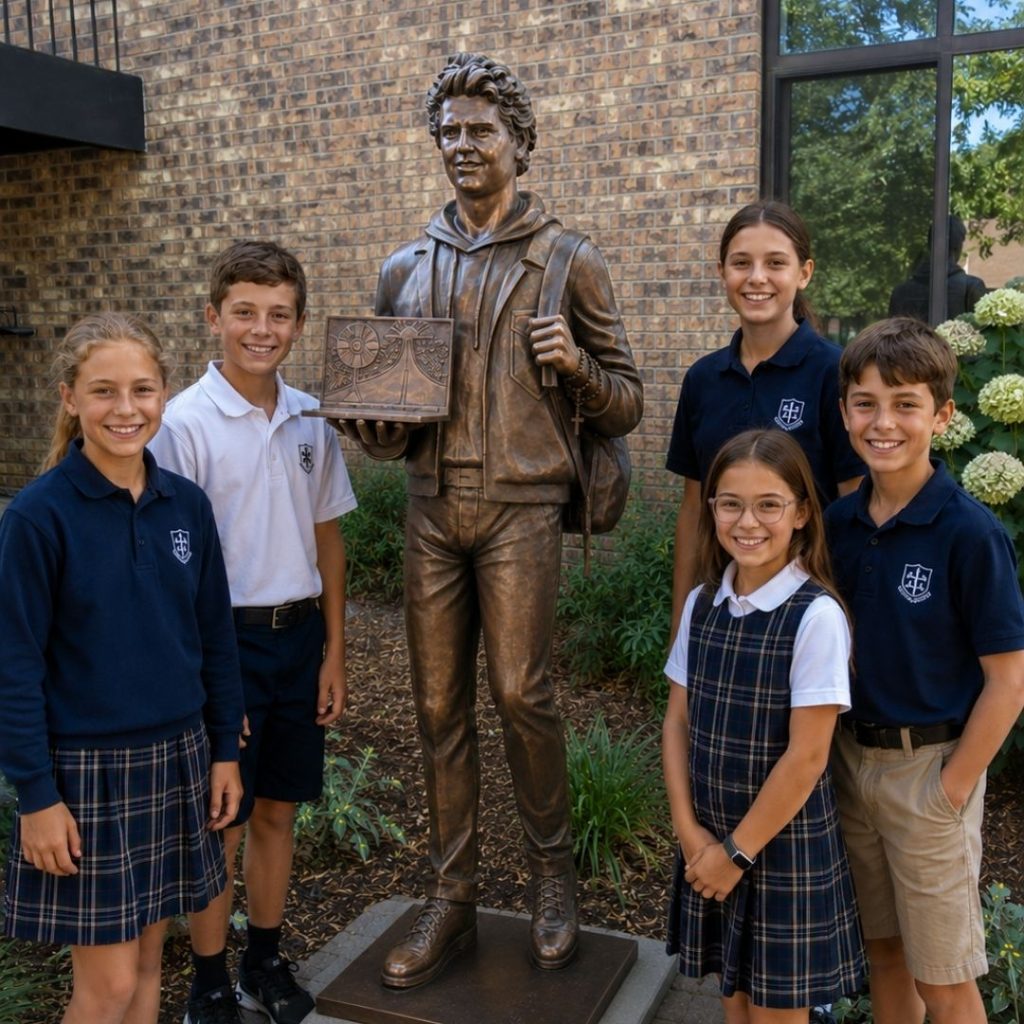
The most successful Catholic school statues become more than landmarks. They become destinations. Students stop, reflect, take photographs, and engage with the story of the saint represented, making sacred art an active part of campus culture.
One of the unexpected outcomes of the project has been the way the sculpture helps define a destination on campus.
Many successful Catholic school statues become gathering places. Students meet there. Families take photographs there. Visitors stop there.
The Carlo Acutis installation has become one of those locations.
Because it sits along a route already used by students, the sculpture naturally attracts attention and interaction.
Children frequently pause to look at the details, discuss the symbolism, and pose for photographs.
In many ways, the monument functions as a miniature pilgrimage site.
While modest in scale, it creates an intentional moment within the broader campus environment where students can reflect on holiness and discipleship.
This is one of the greatest strengths of outdoor sacred art. It shapes experiences. It creates moments. It helps transform ordinary movement through a campus into something meaningful.
Strengthening Catholic Identity Through Sacred Art
Catholic schools face increasing pressure to communicate their identity clearly and intentionally.
Buildings matter. Curriculum matters. Faculty matter. But physical environments matter as well.
When students walk through a campus filled with visible reminders of faith, they receive constant reinforcement of the school’s mission.
Sacred art serves as a permanent expression of Catholic identity.
Unlike temporary programs or seasonal initiatives, a sculpture remains present every day of the year. Students encounter it repeatedly. Its message becomes part of the culture of the institution.
At St. Ignatius, the Carlo Acutis statue reinforces several important truths:
- Holiness is possible today.
- The Eucharist is central to Catholic life.
- Technology can be used for evangelization.
- Young people are called to become saints.
These lessons are communicated not only through words but through the environment itself.
The Power of Modern Saints in Catholic Education
Many Catholic schools feature statues of beloved saints such as Saint Joseph, Saint Francis, Saint John Bosco, or Saint Elizabeth Ann Seton. These remain powerful and important choices.
Yet modern saints offer a unique opportunity. Students often see themselves more easily in contemporary figures.
Carlo Acutis demonstrates that sainthood is not reserved for another era. He reminds students that holiness is possible in their own generation.
For Catholic educators, this connection is invaluable. The sculpture becomes more than a monument. It becomes a bridge between faith and everyday life.
Lessons for Other Churches and Schools
The success of the St. Ignatius project offers several valuable lessons for other institutions considering sacred art.
Choose a Meaningful Location
The best location is often not the most obvious one. Look for places where people already gather, walk, pray, or interact.
Connect the Sculpture to Your Mission
The strongest projects support the goals of the institution. At St. Ignatius, the connection between Carlo Acutis and Eucharistic Adoration made the project especially powerful.
Think Beyond Decoration
Sacred art should teach, inspire, and invite engagement. The most successful installations become part of parish and school life.
Create Opportunities for Encounter
When sacred art encourages people to stop, reflect, and ask questions, it becomes far more than an ornament. It becomes a ministry.
A Lasting Legacy for Future Generations
Every Catholic school hopes to leave a lasting impression on its students.
Some memories come from classrooms. Others come from teachers, coaches, retreats, and friendships. Increasingly, sacred art is becoming part of that legacy as well.
For students at St. Ignatius Parish and School, the Carlo Acutis statue provides a visible reminder that holiness is not confined to the distant past. It is possible today. It is possible for young people. And it is possible for them.
By thoughtfully integrating outdoor sacred art into an existing path of prayer and worship, St. Ignatius created more than a monument. The parish created a destination, a teaching tool, and a lasting expression of Catholic identity.
The result demonstrates why carefully planned Catholic school statues continue to be one of the most effective ways to strengthen faith formation, beautify a campus, and inspire future generations.
Considering Sacred Art for Your School or Parish?
Every Catholic campus contains opportunities to create places of encounter, prayer, and learning. Whether you are considering a patron saint statue, prayer garden, memorial installation, or educational monument, the right sculpture can become a lasting part of your institution’s mission.
Explore how sacred art can help transform your campus and strengthen Catholic identity for generations to come.