
Saint Josephine Bakhita
Freedom in Christ
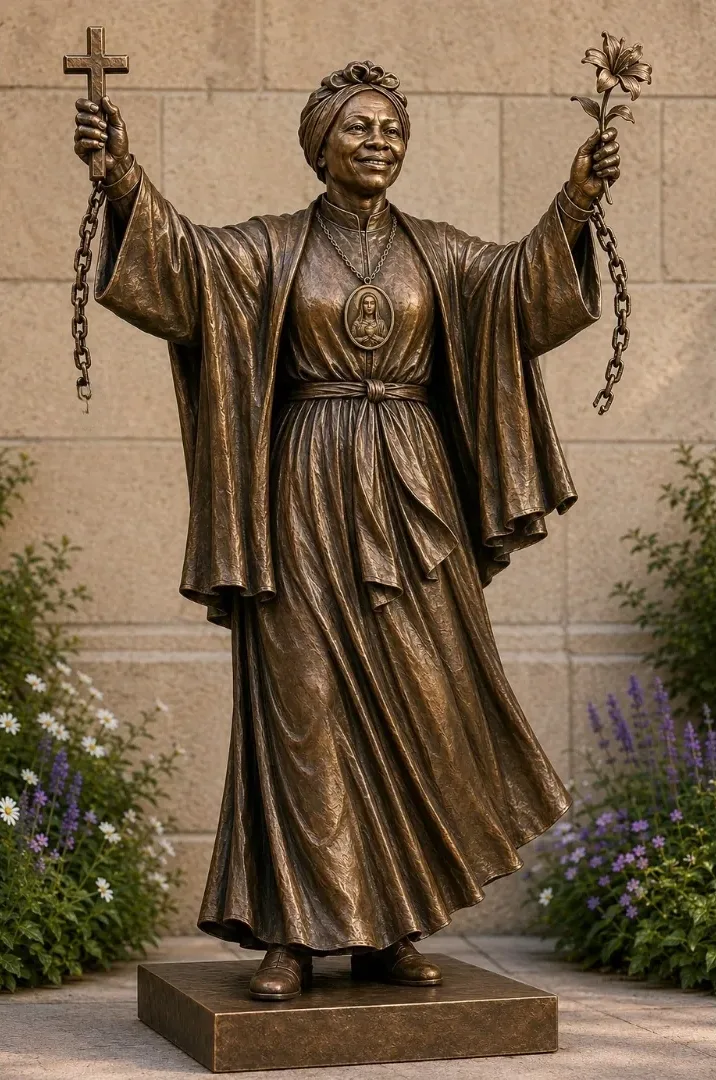
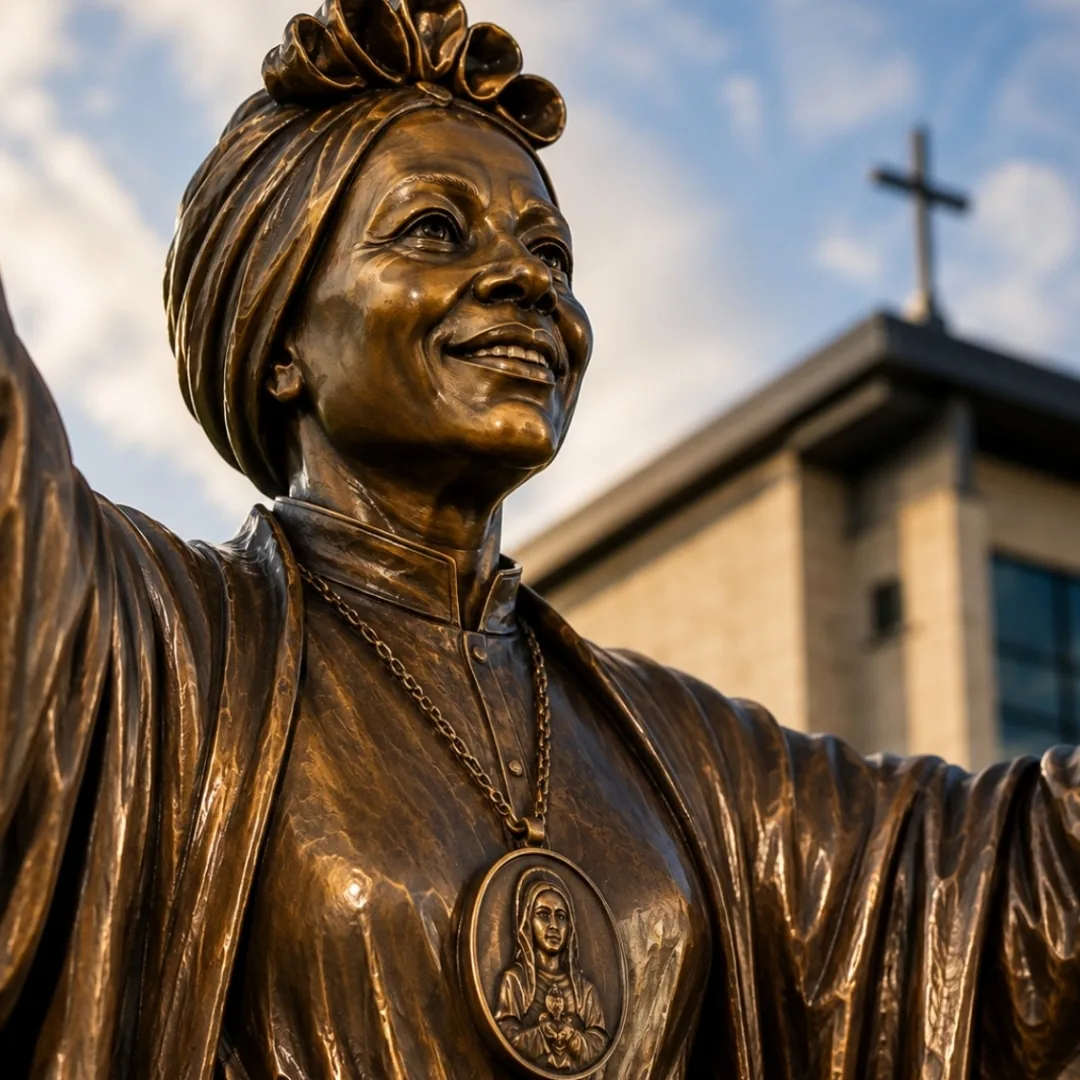
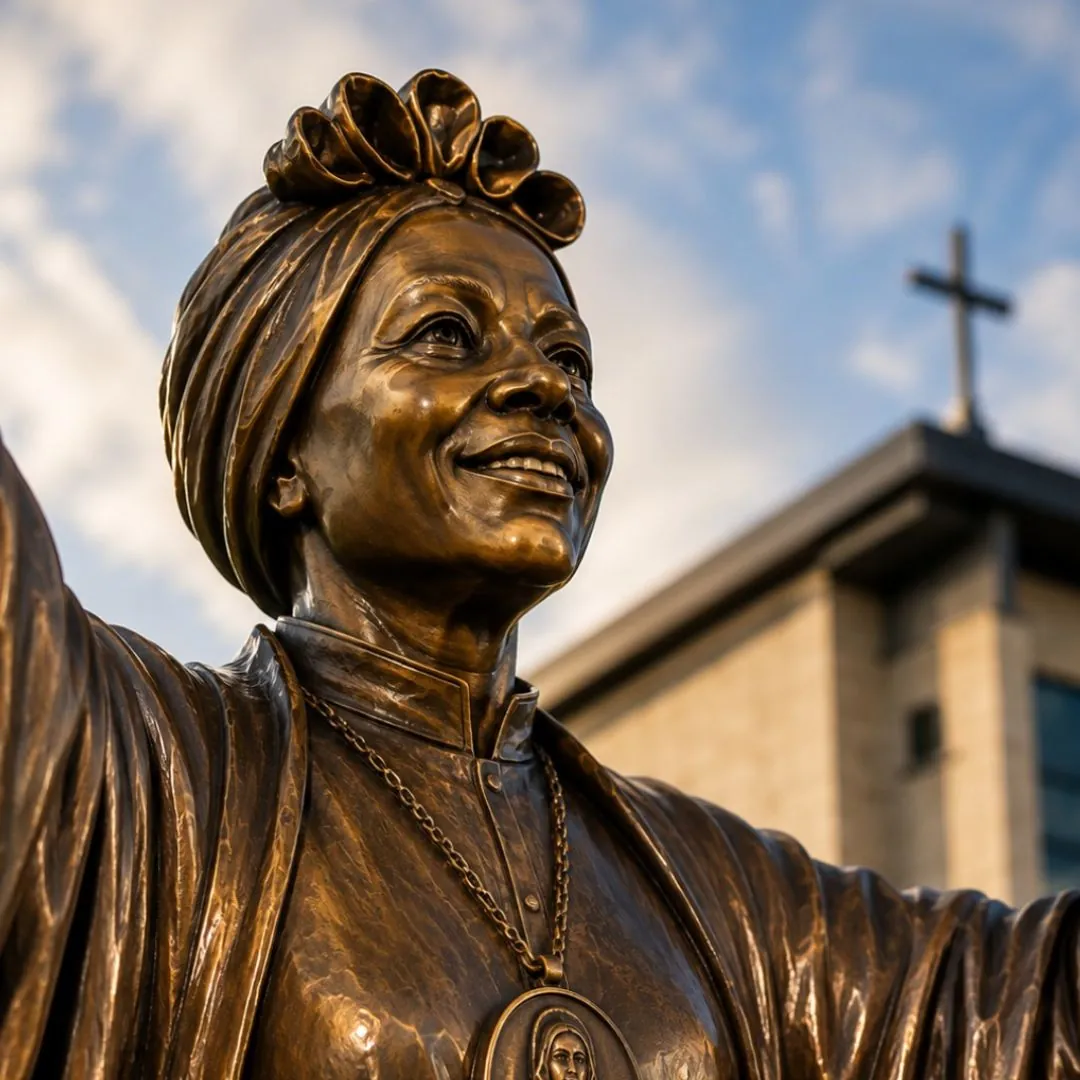
An original Indweller design (rendered with AI) depicting Saint Josephine Bakhita raising the Cross and lily, with broken chains, as a powerful witness to faith, freedom and the dignity of every human person.
The story
Story Behind the Sculpture
Saint Josephine Bakhita’s life moved from enslavement and suffering to freedom, faith and remarkable peace. Freedom in Christ presents her not as a victim of her past, but as a woman transformed by grace.
Her arms are raised in a gesture of triumph and thanksgiving. The sculpture emphasizes the joy and spiritual freedom that came to define Bakhita’s witness, even after a life marked by profound cruelty.
Rather than looking downward or inward, Bakhita lifts her gaze and opens the composition outward. The result is a sculpture centered on hope: a woman whose dignity could not be destroyed and whose faith ultimately became stronger than the chains that once bound her.
What the details mean
Symbolism
The Broken Chains
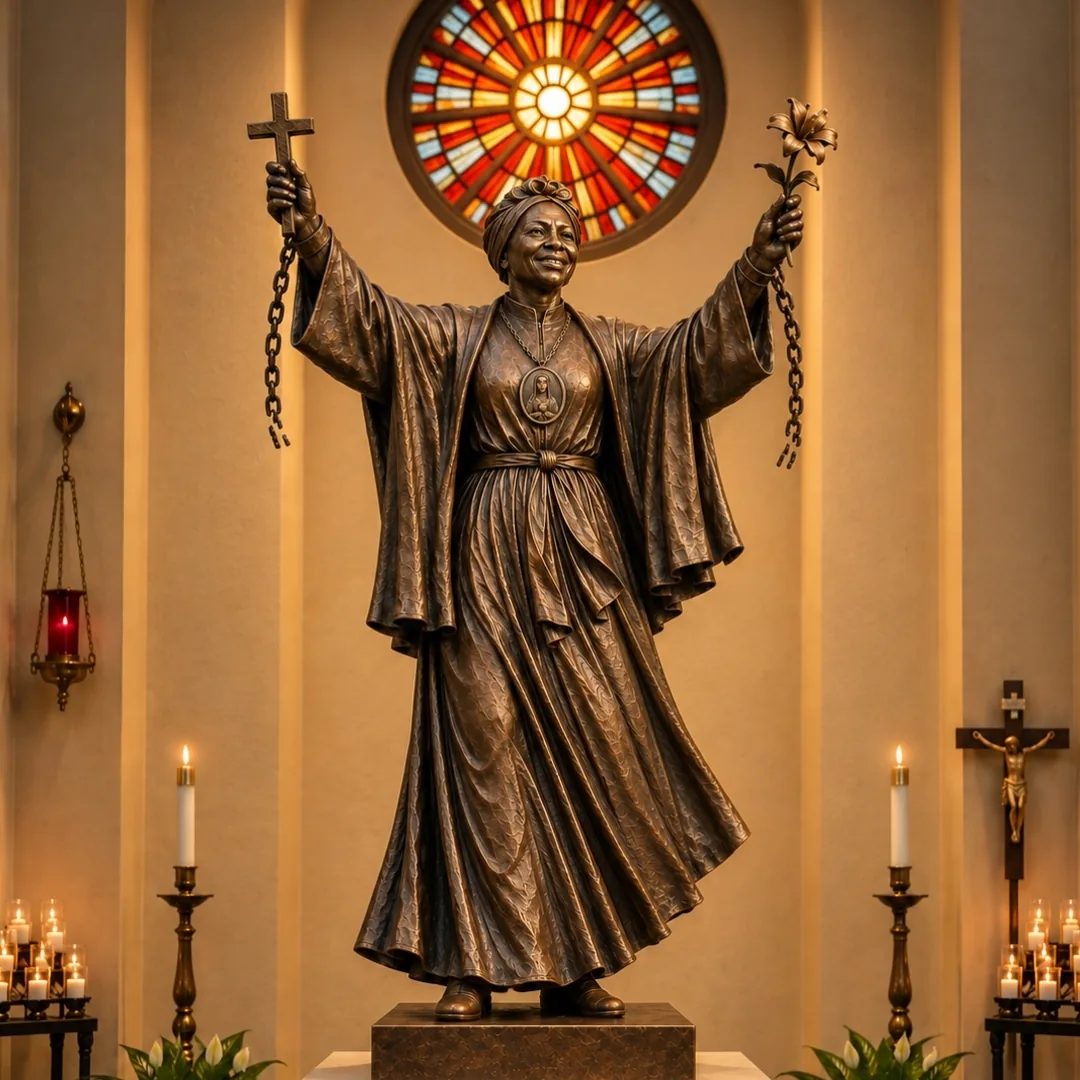
The broken chains are the most immediate symbol of Bakhita’s story. They represent her release from physical slavery, but they also point to a deeper spiritual freedom—the freedom she found in Christ.
The Cross
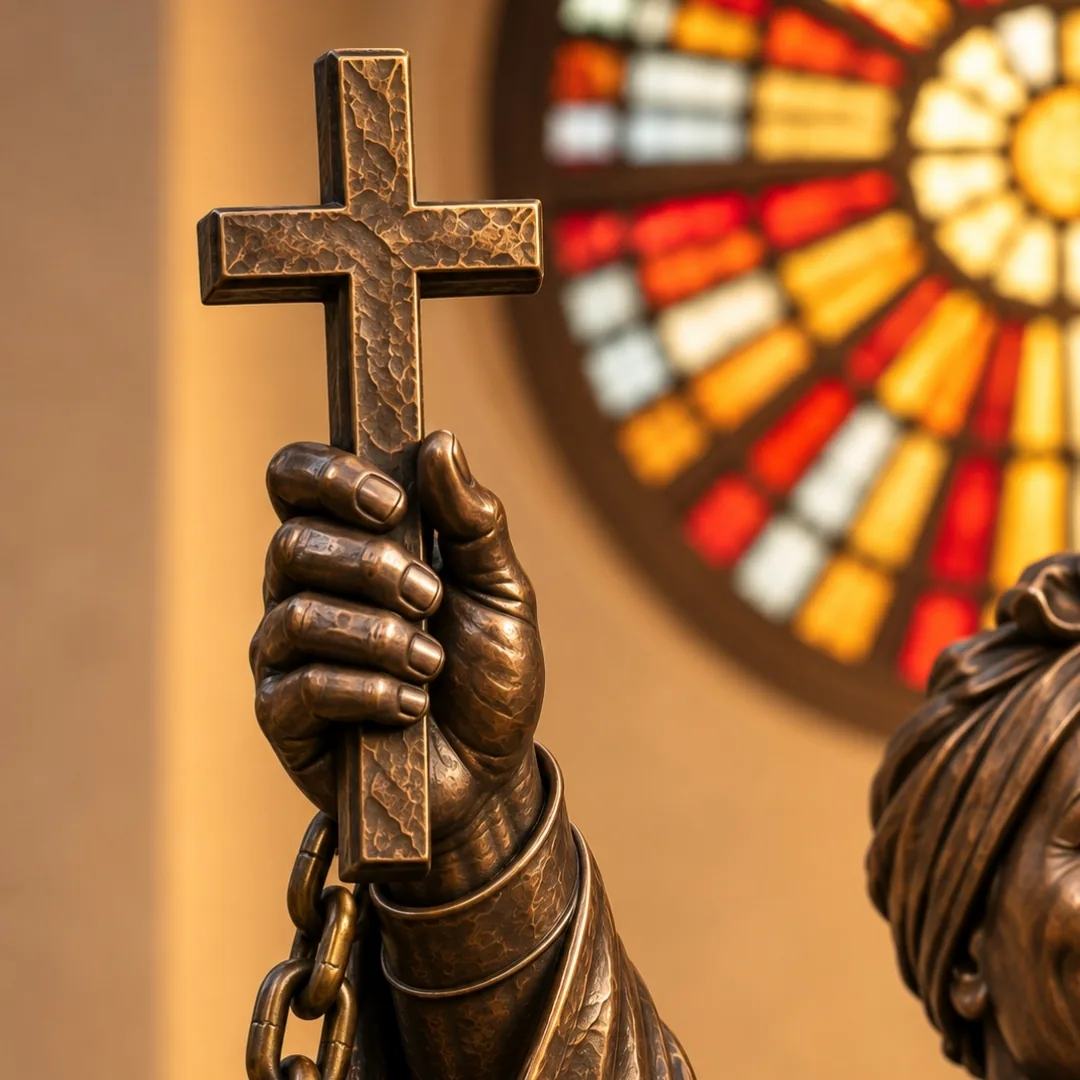
Bakhita raises the Cross as the source of her hope and identity. Her faith did not erase the suffering of her past, but it gave that suffering a new meaning and became the foundation of the peace and freedom she later embodied.
The Lily
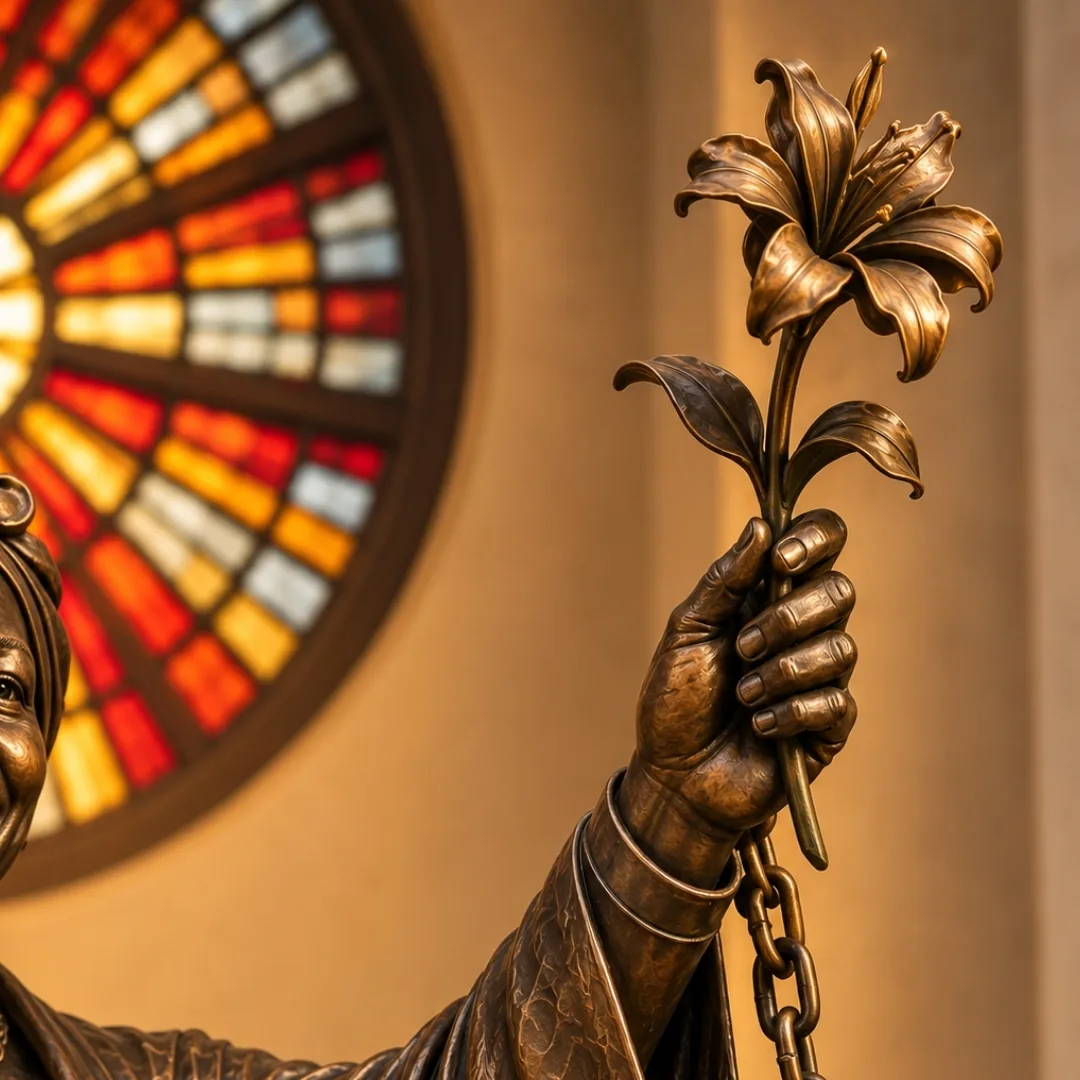
The lily represents Bakhita’s devotion to the Blessed Virgin Mary. Raised in her hand alongside the Cross, it reflects the Marian devotion that became an important part of her Catholic faith and religious life.
The Medallion
The medallion worn over Bakhita’s heart recalls her devotion to Our Mother of Sorrows. It links her own suffering to the suffering of Mary and places her personal story within the larger mystery of faith, endurance and redemption.
The Raised Arms
Bakhita’s posture is intentionally expansive and joyful. Her raised arms transform the composition from one of captivity into one of liberation, praise and victory.
Options
Available in a Variety of Sizes and Materials
The composition can be adapted for churches, schools, universities, chapels, prayer gardens and other sacred spaces.
Materials
- Bronze
- Fiberglass
- Resin Stone
Sizes
- Miniature
- Half-Life Size
- Life-Size
- Monumental
About the saint
About Saint Josephine Bakhita
Saint Josephine Bakhita was born in Darfur, Sudan, around 1869. As a child, she was kidnapped and sold into slavery, enduring years of violence and displacement.
After eventually being brought to Italy, Bakhita encountered the Canossian Sisters and began learning about the Christian faith. She later gained her legal freedom and chose to remain with the sisters.
Bakhita was baptized, entered religious life and became known for her gentleness, humility and extraordinary forgiveness. Her life became a powerful witness to the dignity of every human person and to the freedom found in Christ.
She died in 1947 and was canonized in 2000. Today, she is widely honored as a patron of victims of human trafficking and modern slavery.
Seen in place
Reading about Saint Josephine Bakhita
From the blog
-
 Choosing a Patron Saint: How Catholic Schools, Universities, Parishes, and Ministries Can Find the Right Namesake August 1, 2026
-
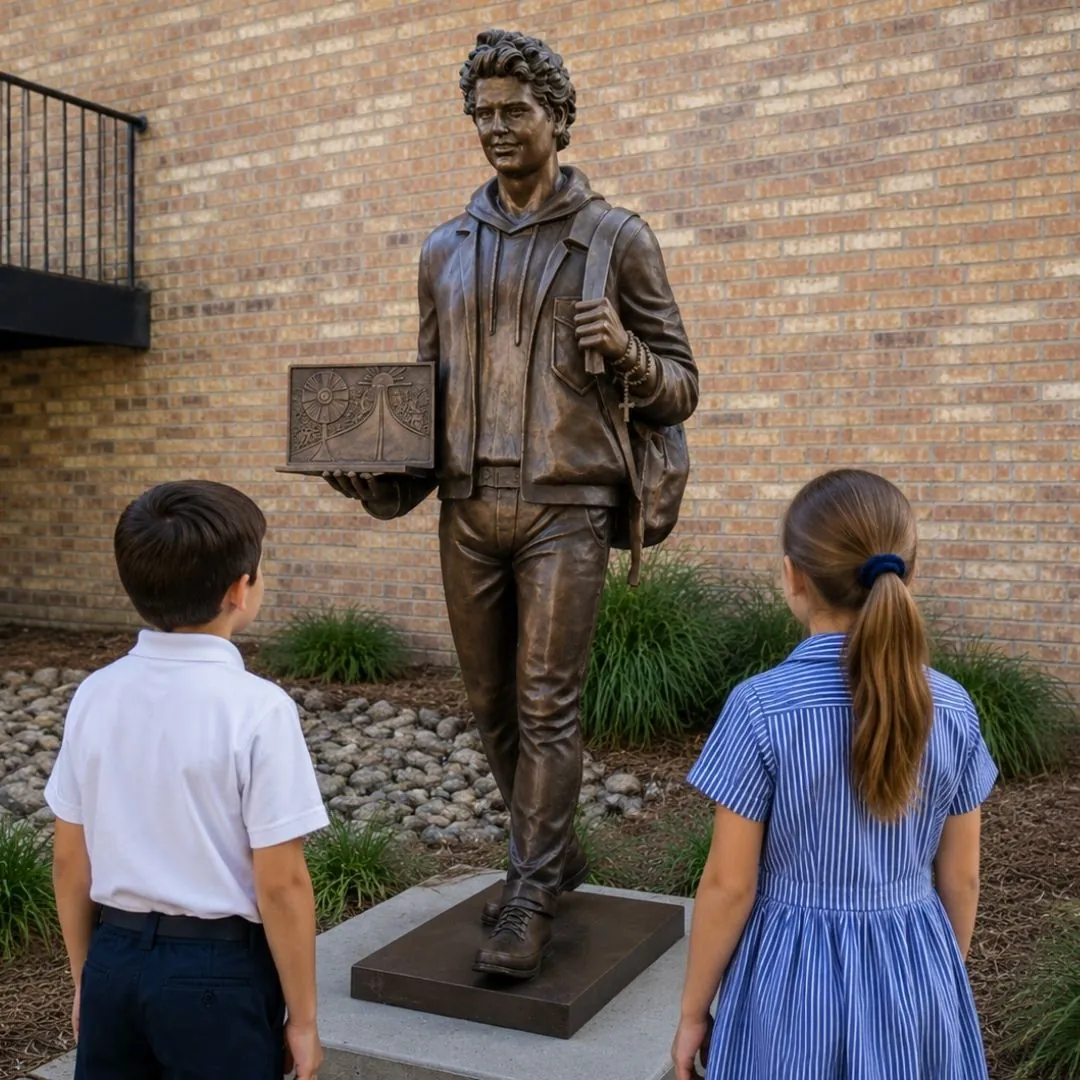 More Than Decoration: Why Sacred Art Matters in Catholic Education July 10, 2026
-
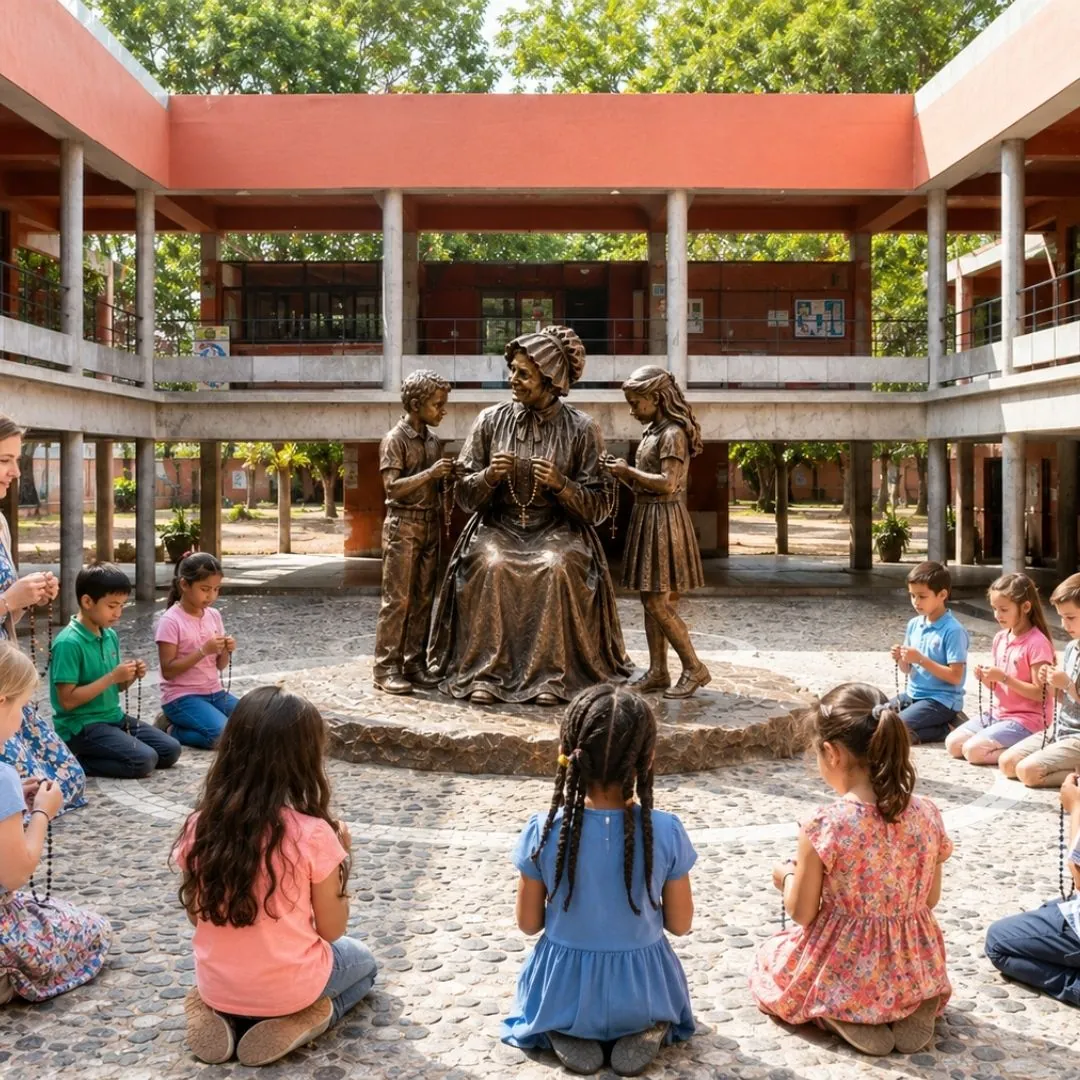 Beyond the Religion Classroom: 8 Ways Sacred Art Can Become a Teaching Tool in Catholic Schools September 9, 2026
Keep exploring
Related Sculptures
Looking for Something Unique?
Every community has its own story to tell. If you don't see exactly what you're looking for in the Indweller Collection, our artists can work with you to create an original sculpture designed specifically for your church, school, cemetery, hospital, or campus.