
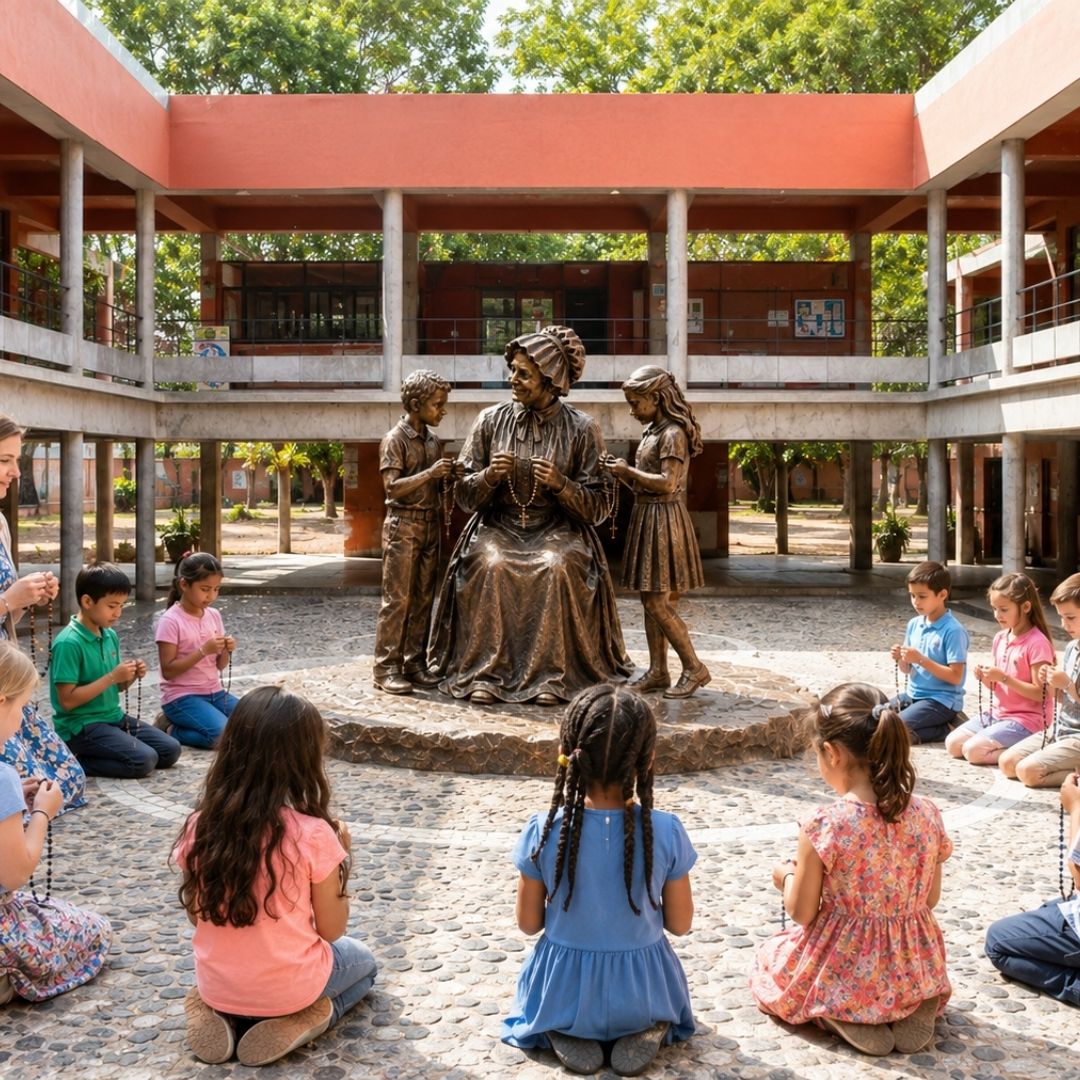





From donor appeal and outdoor classrooms to lighting, sight lines, seasonal beauty, and the movement of the sun, these often-overlooked considerations can transform a prayer garden from a landscaping project into a place of prayer, formation, and community.
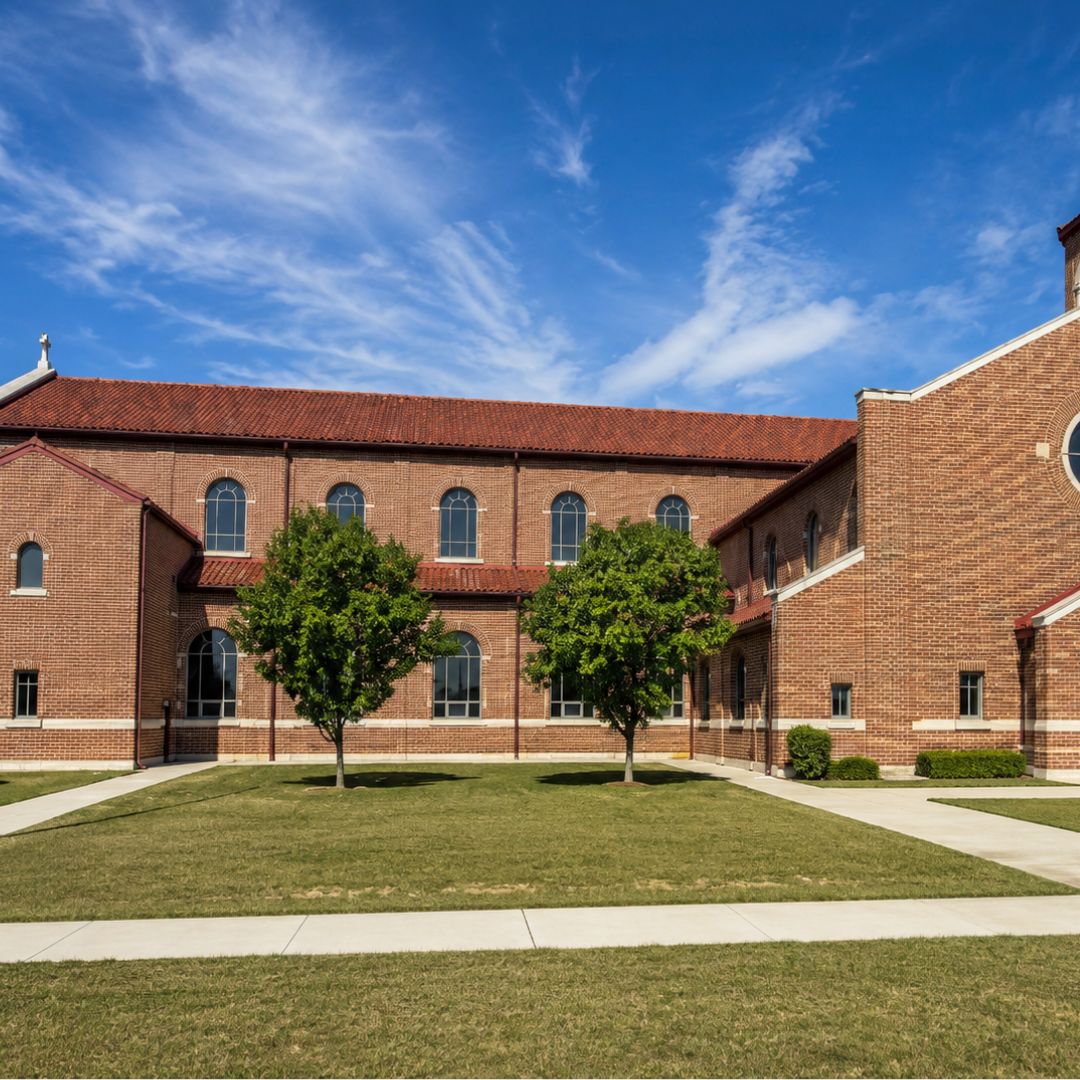
At first glance, this courtyard appears to be little more than an open lawn. Yet spaces like this often provide the ideal foundation for a prayer garden. Existing walkways, visibility from church entrances, mature trees, and convenient access can create the framework for a meaningful outdoor devotional space without requiring extensive site modifications.
A well-designed prayer garden can become one of the most beloved places on a church campus. It can provide a setting for personal prayer, family gatherings, school activities, Marian devotion, parish events, and moments of quiet reflection throughout the year.
Yet many prayer gardens never quite achieve their potential.
Often, this happens because committees focus heavily on landscaping and individual features while overlooking broader questions about how the space will actually be used. The most successful prayer gardens are not simply beautiful. They are thoughtfully planned around people, devotion, movement, and long-term parish life.
If your parish is considering a prayer garden, here are ten critical considerations that can make the difference between a pleasant landscape feature and a destination that serves generations of parishioners.
1. Start with the Purpose Before the Plants
Before discussing flowers, benches, or statues, begin by asking a simple question:
What is this garden intended to accomplish?
Different goals lead to very different designs.
A Marian shrine may encourage quiet personal prayer. A school prayer garden may support outdoor faith formation. A memorial garden may provide a place for remembrance. A Eucharistic prayer garden may become a setting for processions, rosaries, and parish gatherings.
When the purpose is clear from the beginning, every subsequent decision becomes easier.
2. Choose a Location People Already Pass
One of the most common mistakes is placing a prayer garden in an area that is technically available but rarely visited.
Successful prayer gardens are often located:
- Along major pedestrian routes
- Near church entrances
- Adjacent to school buildings
- Along paths connecting parking lots and parish facilities
- Beside gathering spaces where people naturally congregate
Visibility matters.
A prayer garden cannot enrich parish life if parishioners rarely encounter it.
3. Sacred Art Creates a Destination
Landscaping alone rarely creates a destination.
A meaningful sculpture, shrine, grotto, or devotional focal point gives visitors a reason to stop, pray, and return.
Sacred art provides identity and purpose. It transforms a landscaped area into a place of encounter.
Whether the focal point is Our Lady, Christ, a patron saint, or another devotional image, the artwork often becomes the heart of the entire garden.
4. Marian Shrines Continue to Draw People
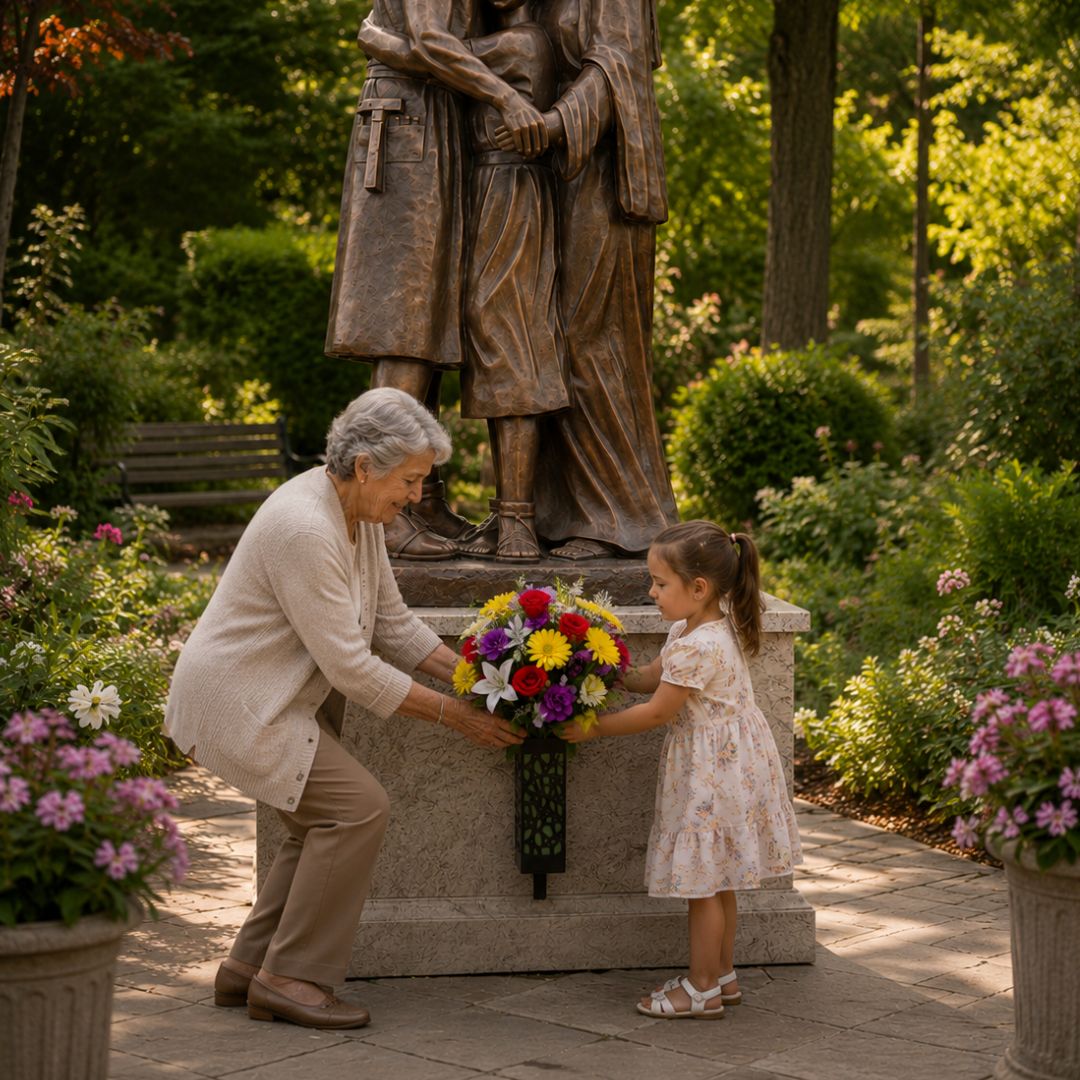
Few devotional spaces are as universally loved as Marian shrines.
Throughout the world, Catholics naturally gravitate toward places dedicated to Our Lady. A Marian shrine provides a familiar place for prayer, intercession, reflection, and personal devotion.
When parish committees are uncertain where to begin, a Marian prayer garden is often an excellent choice because of its broad appeal across generations.
Make It Easy for Visitors to Participate
One of the reasons Marian shrines remain so beloved is that they invite participation.
Rather than simply observing the space, visitors can actively engage in devotional practices.
Providing a simple flower vase or designated area for offerings encourages parishioners to return throughout the year and fosters a deeper personal connection with the space.
5. Think Beyond Individual Prayer
While personal prayer is important, the most successful prayer gardens often support a variety of parish activities.
Consider how the space might be used for:
- Rosary groups
- Small faith-sharing gatherings
- Seasonal devotions
- School activities
- Family prayer
- Processions
- Retreats
The more ways a garden can serve the parish community, the greater its long-term impact.
Prayer Gardens Can Become Outdoor Classrooms
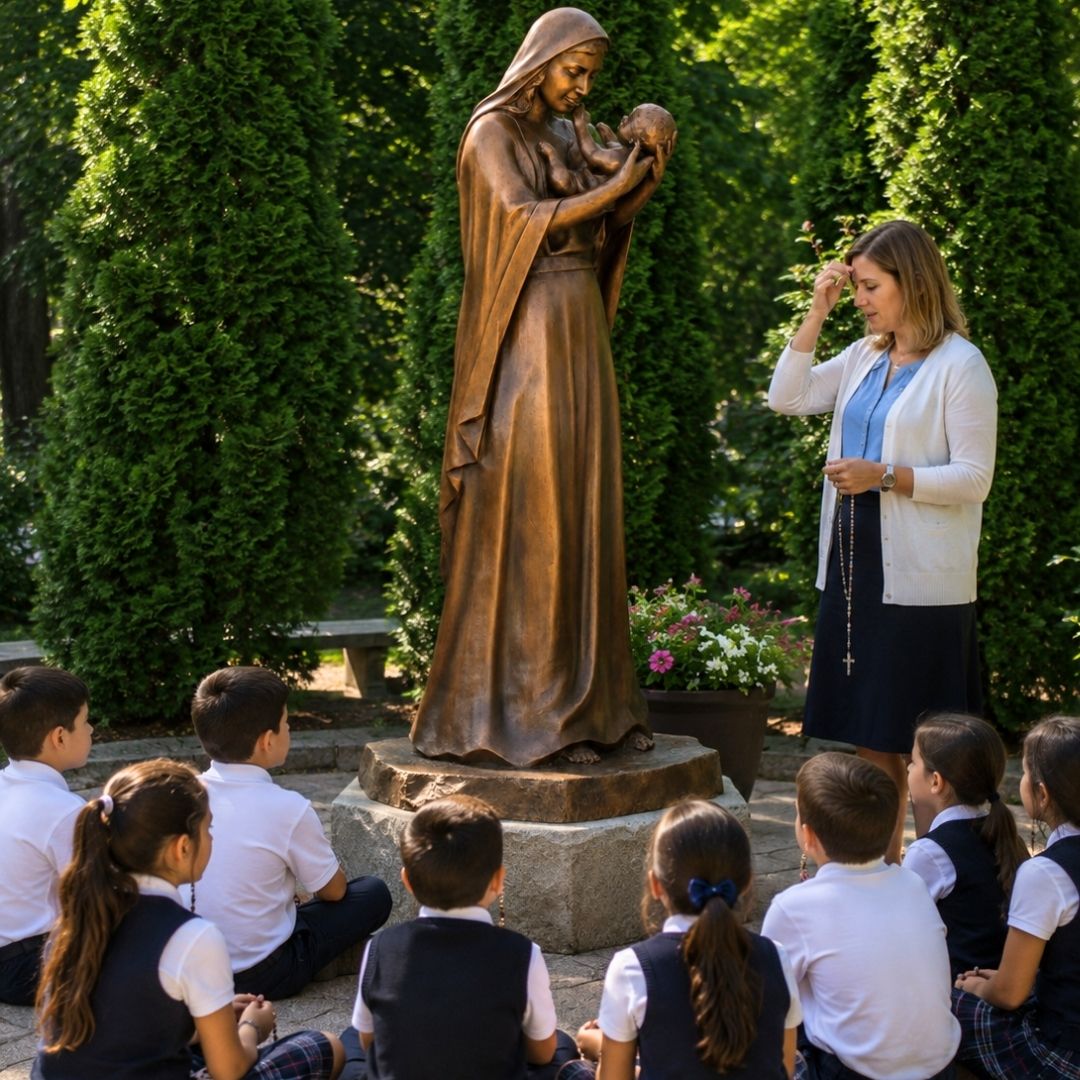
For Catholic schools and parish religious education programs, prayer gardens can become powerful teaching environments.
A prayer garden that serves as an outdoor classroom offers a visible and lasting way to support the faith formation of future generations.
This is also worth considering when discussing fundraising. Potential donors are often motivated less by landscaping and more by the opportunity to support evangelization, education, and spiritual growth.
6. Consider Adding an Architectural Feature
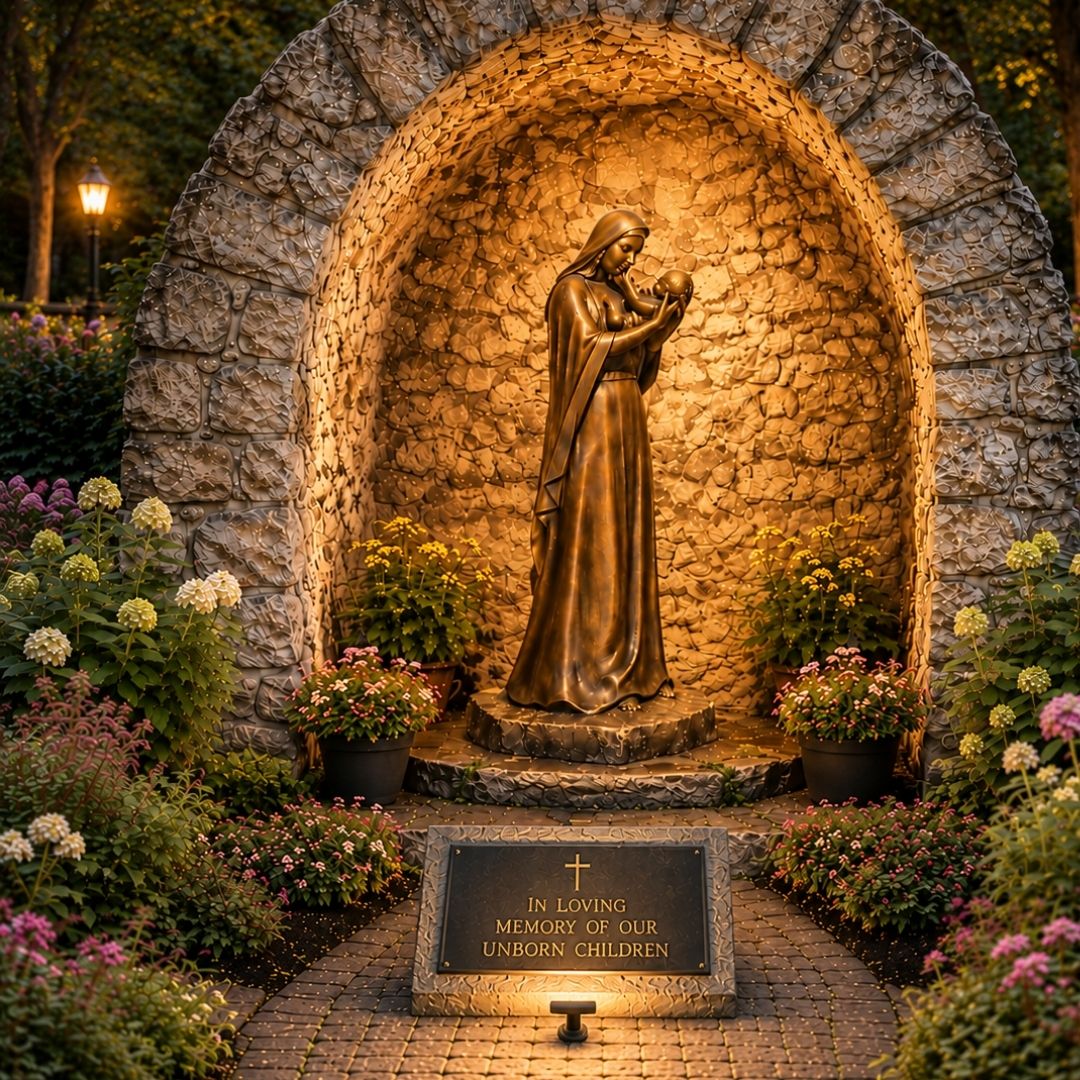
Some of the most memorable prayer gardens include an architectural element that helps define the space.
Examples include:
- Grottos
- Shrine walls
- Arbors
- Stone niches
- Courtyard enclosures
These structures create a stronger sense of arrival and often make the garden feel more intentional and sacred.
A thoughtfully designed architectural feature can help transform a simple landscaped area into a true destination.
7. Design for Evening Prayer
Many parishioners visit church grounds before or after work, especially during the fall and winter months.
Without lighting, a prayer garden may become largely unusable during significant portions of the year.
Consider:
- Statue lighting
- Pathway lighting
- Accent lighting
- Shrine illumination
- Safety lighting
Good lighting extends usability while creating a warm and inviting atmosphere after sunset.
8. Let the Landscaping Reinforce the Theme
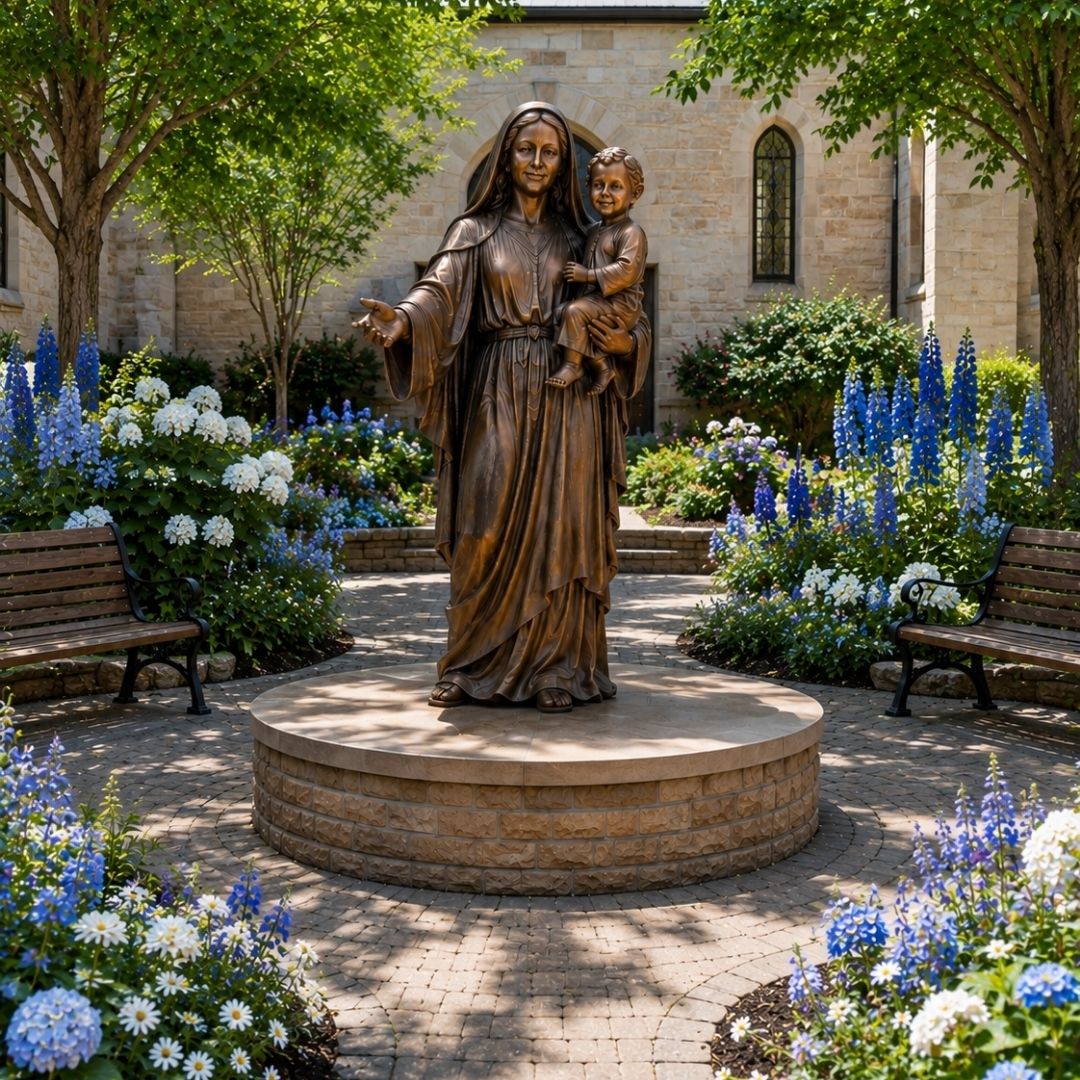
Landscaping should support the devotional purpose of the garden.
Colors, plant selections, textures, and seasonal interest can all reinforce the theme being expressed.
Blue and white flowers, for example, can subtly reinforce Marian symbolism while creating a cohesive visual experience.
Thoughtful landscaping choices help communicate the purpose of the garden even before a visitor begins to pray.
9. Design for Life Events and Family Memories
Prayer gardens frequently become settings for important milestones.
Families often gather for photographs following:
- First Communion
- Confirmation
- Baptisms
- Weddings
- Anniversaries
Yet many committees never plan for this use.

Providing adequate gathering space, wider pathways, and unobstructed sight lines can help accommodate these meaningful moments while making the space more welcoming overall.
A prayer garden that becomes part of a family’s treasured memories often becomes one of the most beloved places on the entire campus.
10. Think About How the Garden Changes Throughout the Year
A prayer garden should remain inviting in every season.
Many gardens look beautiful in June but feel neglected by January.

Consider:
- Evergreen plantings
- Winter structure
- Lighting
- Hardscape materials
- Snow conditions
- Seasonal maintenance
Gardens that remain visually appealing year-round continue to attract visitors long after the growing season ends.
Use Sight Lines to Draw People Forward
Thoughtful sight lines can dramatically influence how visitors experience a prayer garden.
A clear visual axis leading toward a statue, shrine, or devotional focal point naturally draws people into the space.
Pathways, plantings, and architectural features can all work together to create a sense of movement and arrival.
Bonus Consideration: Design with Sunlight in Mind
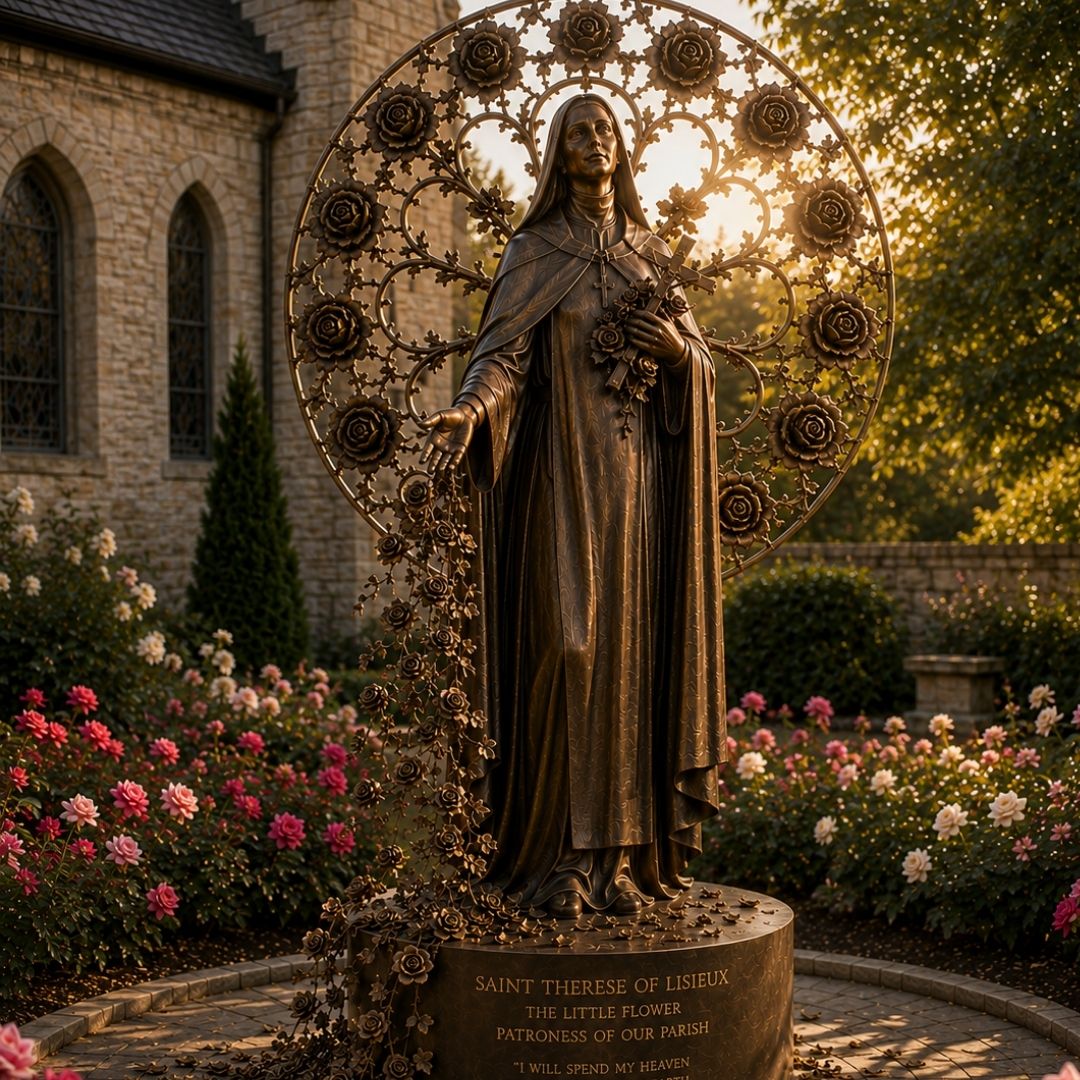
One of the most overlooked aspects of prayer garden design is the movement of the sun.
The direction of morning and evening light can dramatically influence how visitors experience sacred art.
In one prayer garden installation, a St. Thérèse sculpture was positioned so the setting sun falls behind the circular crown of roses representing Heaven. During certain times of year, the light creates a striking visual effect that deepens the symbolism of the artwork and enhances the visitor experience.
Considering solar orientation early in the planning process can create memorable moments that visitors may remember for years.
Final Thoughts
The most successful prayer gardens are rarely the largest or most expensive.
They are the ones that thoughtfully consider how people will use the space, how the garden supports prayer and faith formation, and how it contributes to the life of the parish throughout the year.
When planned carefully, a prayer garden can become a place where people pray, learn, celebrate milestones, encounter sacred art, and deepen their relationship with Christ for generations to come.
Many churches already have the space. The challenge is not finding room for a prayer garden. It is recognizing the potential that may already exist on the campus and thoughtfully transforming it into a place of beauty, devotion, and encounter.
If your parish is considering a prayer garden, taking time to think through these considerations at the beginning can help ensure that the finished space becomes one of the most meaningful places on your campus.
Planning a Prayer Garden for Your Parish?
Indweller Artistic helps parishes and schools transform ordinary campus spaces into meaningful places of prayer, devotion, and encounter. From Marian shrines to custom sculpture and complete devotional focal points, we can help you design a prayer garden that serves your community for generations.