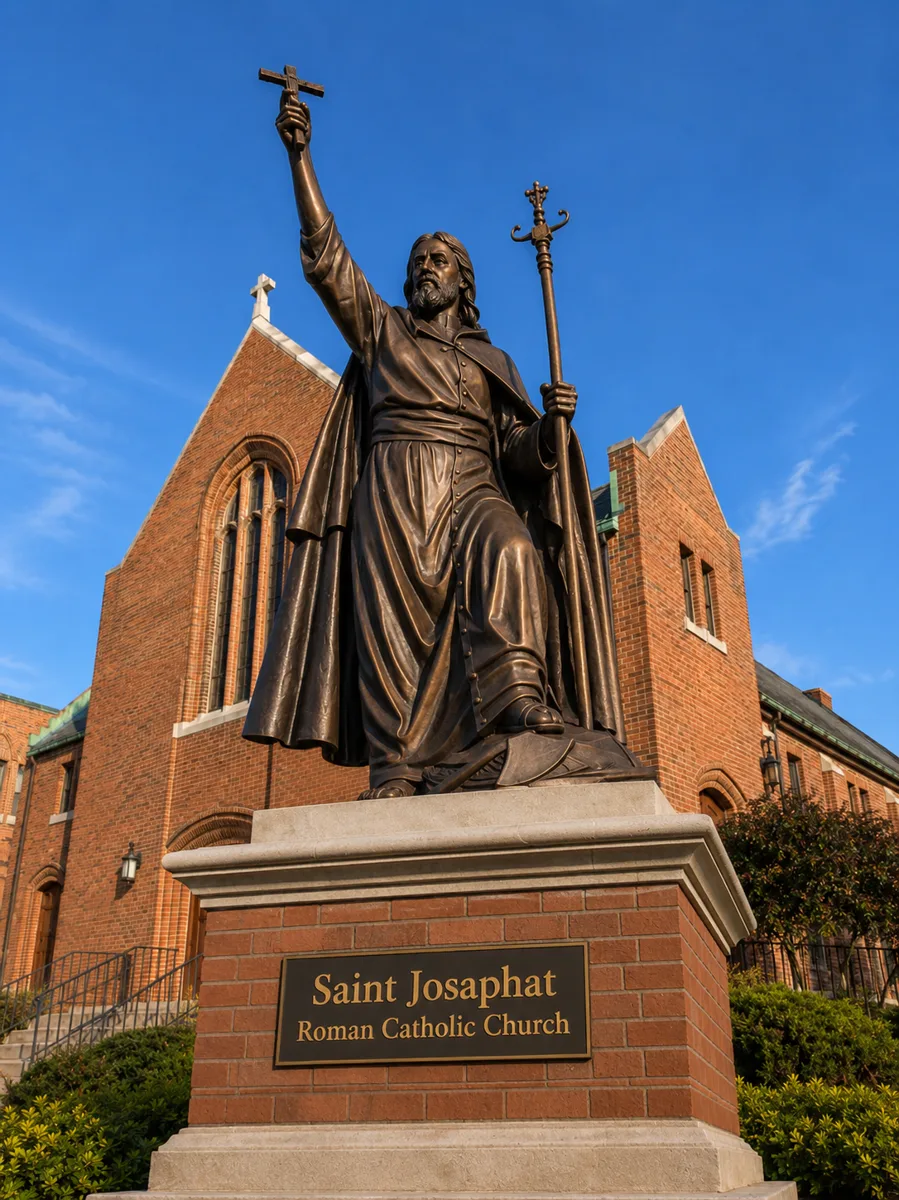
Installed
St. Josaphat Catholic Church
Cheektowaga, New York
Life-size St. Josaphat sculpture

Apostle of Christian Unity
An original Indweller sculpture depicting Saint Josaphat as a courageous witness to unity, faith and the Gospel.
The story
Saint Josaphat devoted his life to the difficult work of Christian unity. As a Basilian monk, priest and eventually Archbishop of Polotsk, he labored to reconcile divided Christians while defending the Byzantine traditions of his own Church. (Vatican News)
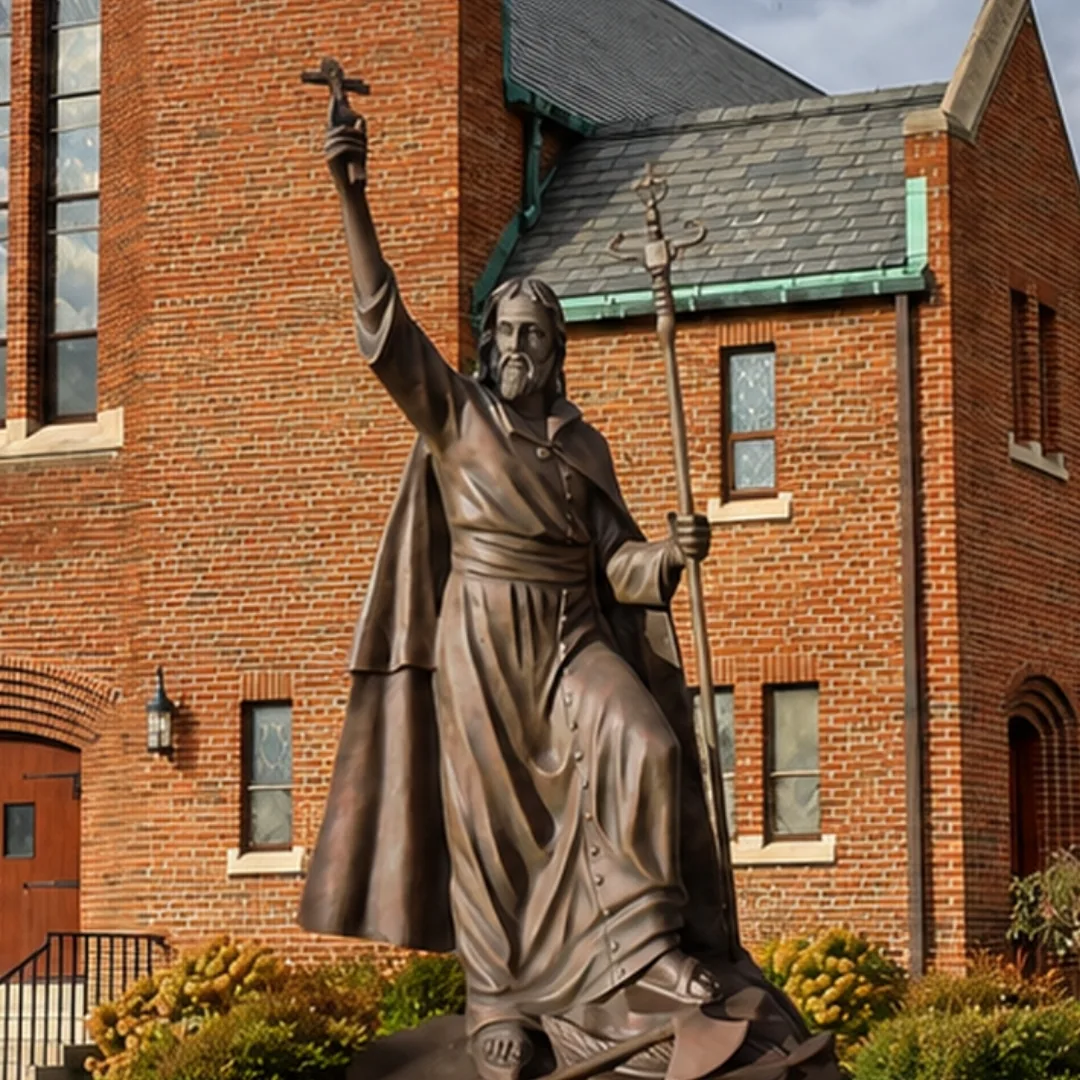
Apostle of Christian Unity presents Josaphat at the height of that mission. He advances forward with one foot raised, the Cross lifted above him and his pastoral staff firmly in hand. The composition is active rather than contemplative, reflecting a man willing to move toward conflict rather than retreat from it.
His martyrdom gives the sculpture its deeper meaning. Josaphat ultimately gave his life for the unity he preached, transforming the work of reconciliation from an ideal into a personal sacrifice. (Vatican News)
What the details mean
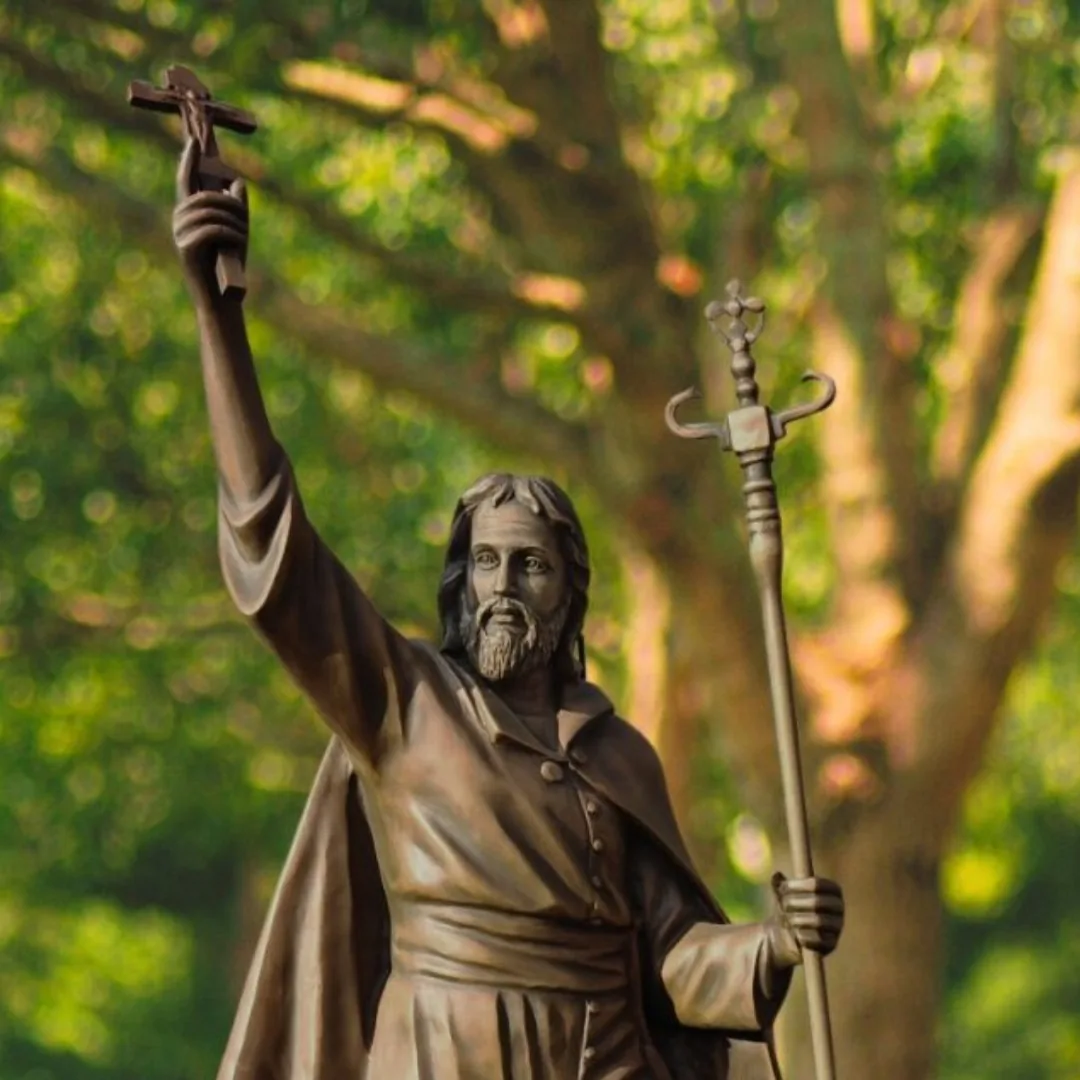
Josaphat holds the Cross high above him, making Christ the visual center of the composition. It represents the faith he proclaimed and the conviction that authentic Christian unity must ultimately be rooted in Christ.
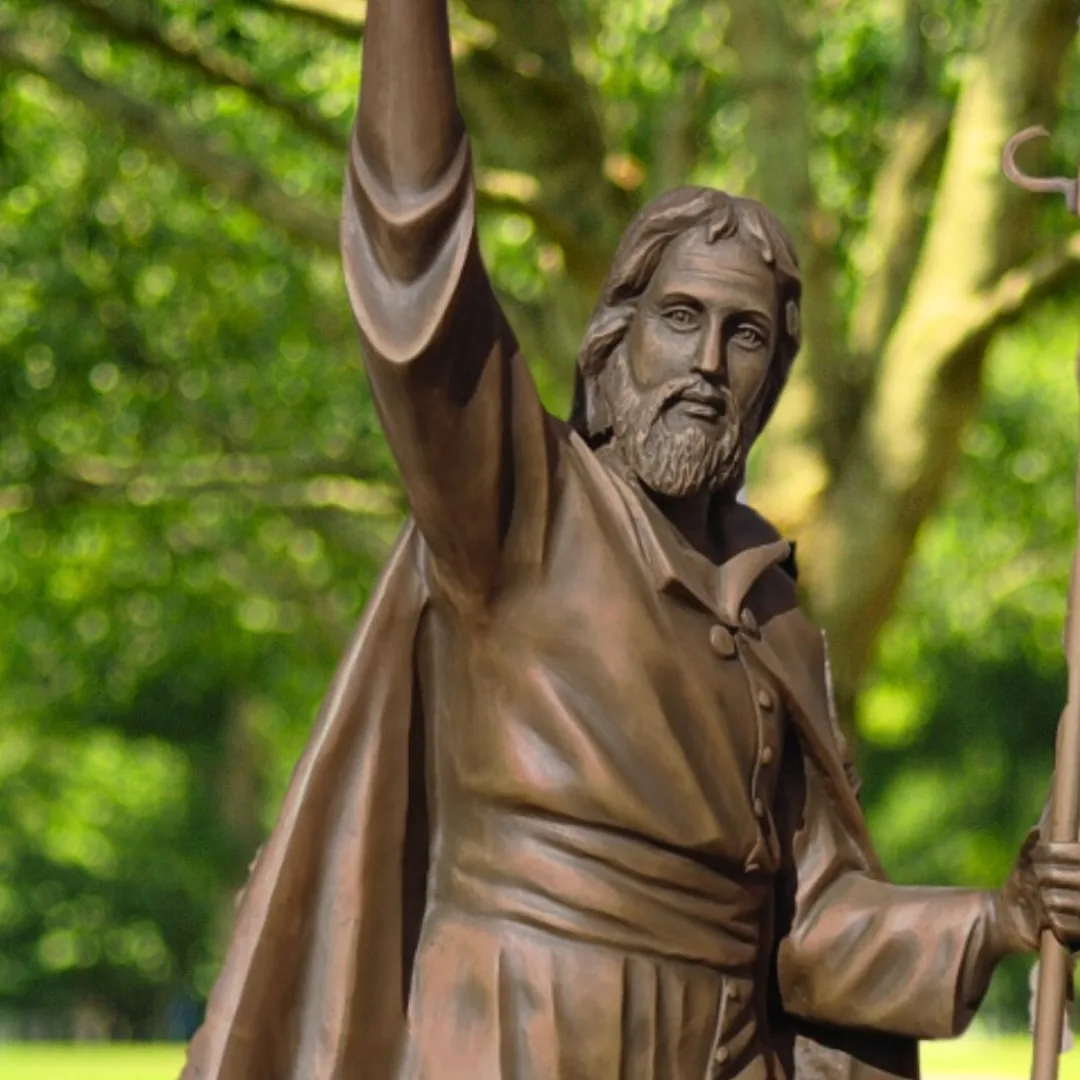
The flowing cape gives the sculpture a sense of forward movement and authority. It reinforces Josaphat’s role as a bishop while also suggesting the urgency and courage with which he pursued his mission.
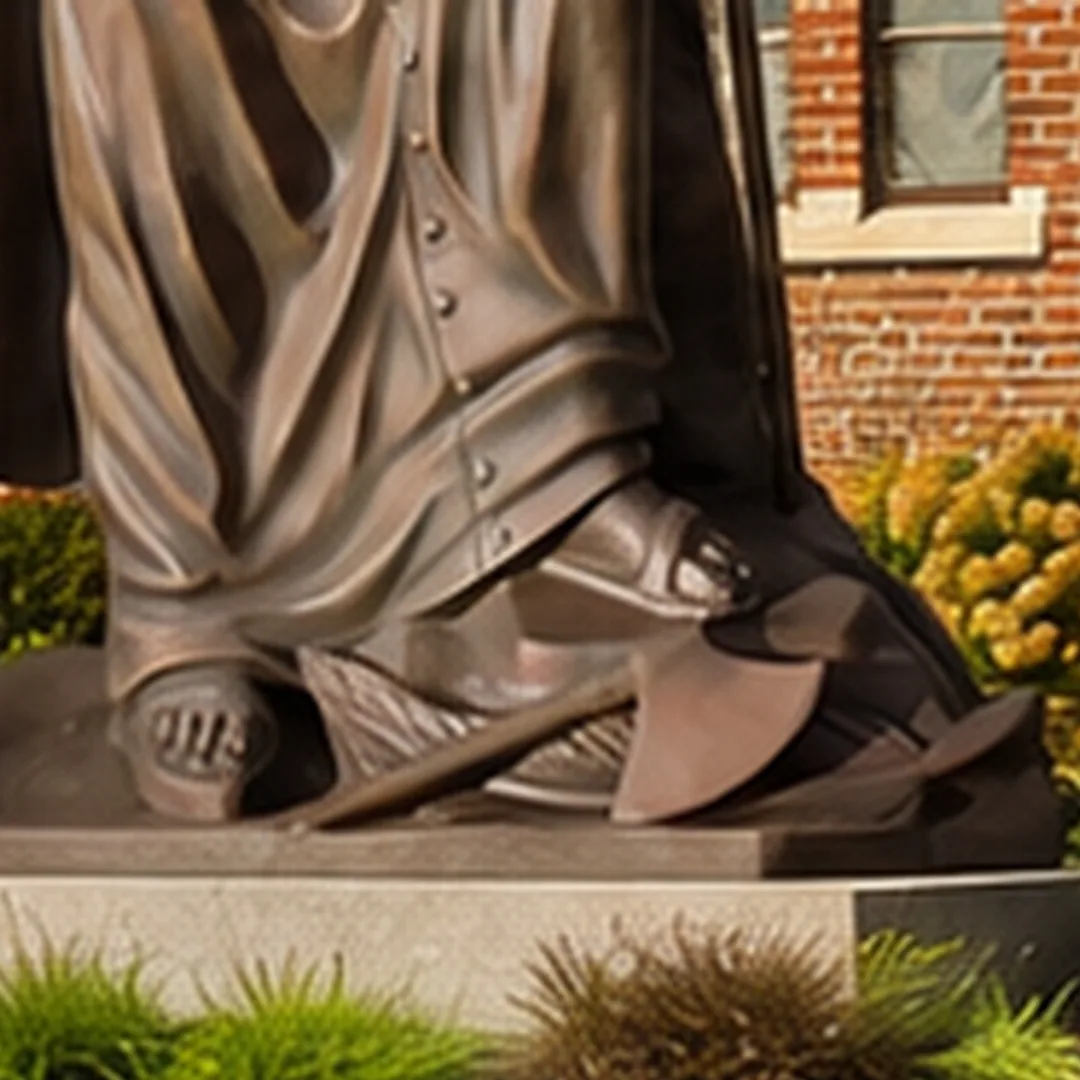
The palm frond at Josaphat’s feet is the traditional Christian symbol of martyrdom and victory through sacrifice. It recalls that his work for unity ultimately cost him his life.
The staff identifies Josaphat as a bishop and shepherd of the Church. Held firmly in his hand, it represents his responsibility to guide, protect and lead the people entrusted to him.
The axe refers directly to Josaphat’s martyrdom. Historical accounts record that he was struck with an axe during the violent attack that ended his life in 1623. Its placement at his feet transforms the instrument of his death into part of the testimony of a saint whose commitment to unity endured even unto martyrdom. (Wikisource)
Options
The sculpture can be adapted for parishes, schools, seminaries, universities, Eastern Catholic communities, prayer gardens and other sacred settings.
Materials
Sizes
About the saint
Saint Josaphat Kuntsevych was born around 1580 in what is now Ukraine and entered the Basilian monastic life in 1604. He became known for his prayer, asceticism and preaching before being ordained a priest and later a bishop. (Vatican News)
In 1618, he became Archbishop of Polotsk. His ministry was deeply shaped by the divisions between Eastern Christians and Rome following the Union of Brest. Josaphat worked for communion with the Catholic Church while insisting that the Byzantine liturgy and traditions of his people be preserved. (Vatican News)
Those efforts made him a controversial figure in a period of intense religious conflict. In 1623, he was killed by a mob in Vitebsk. His death became inseparable from his lifelong commitment to Christian unity. (Vatican News)
Canonized in 1867, Saint Josaphat remains one of the Church’s great witnesses to the difficult work of reconciliation between divided Christians.
Seen in place
Installed
Cheektowaga, New York
Life-size St. Josaphat sculpture
Keep exploring
Every community has its own story to tell. If you don't see exactly what you're looking for in the Indweller Collection, our artists can work with you to create an original sculpture designed specifically for your church, school, cemetery, hospital, or campus.